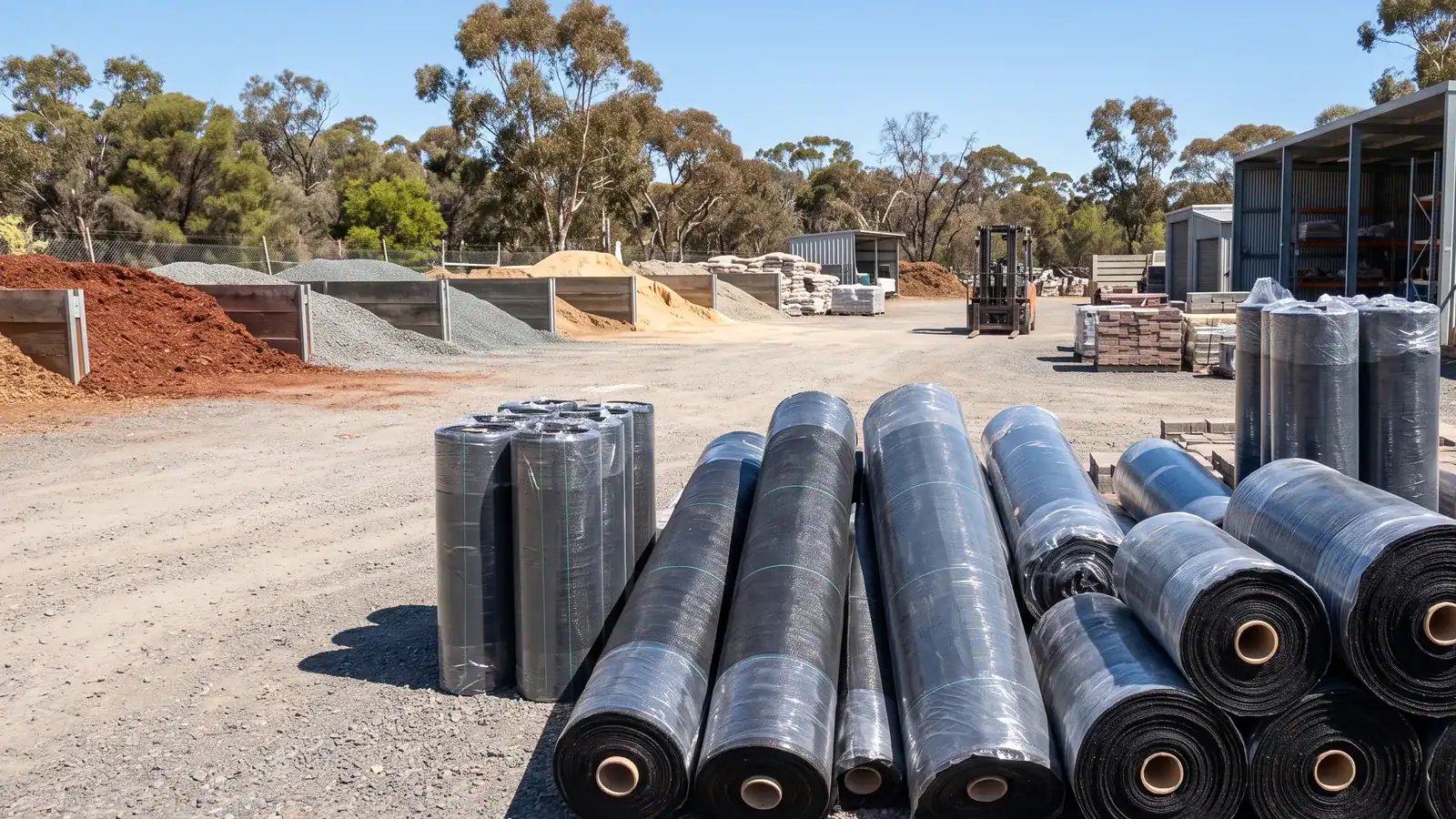
A woven weed mat is one of the most practical ground covers you can lay on a landscaping or revegetation project. It suppresses weed growth without herbicides, lets rainwater drain straight through, and holds up under foot traffic that would shred lighter materials. But not every woven mat is the same. GSM weight, roll width and UV stabilisation all affect how long the fabric lasts and where it performs best.
This guide breaks down the differences between standard and heavy-duty woven weed mat, walks through the sizes available, and explains which option suits each type of project.
Woven weed mat is made from polypropylene tapes that are interlaced in a tight crisscross pattern. Each strand runs over and under the next, which gives the finished fabric its tensile strength and tear resistance. Non-woven fabrics, by comparison, are made from loose fibres that are bonded together with heat or needlepunching. The result is a softer, felt-like sheet that tears more easily under load.
That structural difference shows up on site. Woven mats handle foot traffic, wheelbarrow runs and gravel loads without ripping. Non-woven membranes work well for drainage and filtration, but they are not built for surface exposure or long-term weed suppression above ground.
For weed control on paths, garden beds, orchards and commercial sites, woven is the right choice. For subsurface drainage behind retaining walls or under driveways, non-woven geotextile is the better option. If you want a deeper look at how weed mats perform in Australian conditions, read does weed mat work for Australian landscaping projects.
GSM stands for grams per square metre. It tells you how dense the fabric is. A higher GSM means a thicker, heavier weave with more UV stabiliser and greater puncture resistance. Two GSM ratings cover the vast majority of projects in Australia.
| Specification | 85gsm (Standard) | 110gsm (Heavy Duty) |
|---|---|---|
| Best for | Residential gardens, small beds, paths | Commercial sites, orchards, nurseries, councils |
| UV stabilisation | Yes | Yes (higher concentration) |
| Tear resistance | Good | Excellent |
| Foot traffic | Light to moderate | Heavy, including wheelbarrows |
| Typical lifespan | 5-10 years | 10-15+ years |
| Roll lengths | 50m | 100m |
If you are covering a backyard garden bed or running weed mat under decorative gravel, 85gsm does the job. For commercial revegetation, council work, orchard rows or nursery aisles where the mat takes constant punishment, step up to 110gsm. The heavier fabric also sits flatter under aggregate, which reduces movement over time.
All Stake Supply stocks both weights in multiple widths. The 1.83m x 50m roll in 85gsm is the most popular size for residential and light commercial jobs. For broader coverage on commercial sites, the 3.66m x 100m roll in 110gsm covers ground faster with fewer overlaps.
Choosing the right roll width saves time on site and reduces waste. Narrower rolls work in tight spaces. Wider rolls cover open ground with fewer seams, which also means fewer spots where weeds can push through at the overlap.
Tip: When overlapping rolls, allow at least 150mm of overlap and pin both layers together. This stops weeds finding a gap at the seam. For detailed step-by-step instructions, see our guide on how to lay weed mat.
Woven polypropylene weed mat works in more situations than most people realise. The combination of light-blocking weave, water permeability and physical toughness makes it suitable for both above-ground and buried installations.
For a full rundown on installation techniques, including how to work around existing plantings, check how to lay weed mat around existing plants.
Weeds need sunlight to germinate. According to research from the WA Department of Agriculture, light is the primary trigger for most weed species. The tight polypropylene weave blocks enough light to stop seeds from sprouting underneath, while the fabric itself is too strong for most weed shoots to push through. That is the core mechanism, and it works without any chemical treatment.
At the same time, the weave structure lets rainwater and irrigation drain straight through to the soil below. Air exchange continues as well, which keeps the soil biology healthy. This is a major advantage over solid plastic sheeting, which traps moisture, promotes root rot and kills beneficial organisms in the soil.
For a broader look at weed mat effectiveness, see what is a weed mat and how does it work.
Even the heaviest woven mat will shift if it is not pinned properly. Wind, foot traffic and aggregate movement all put lateral force on the fabric. Proper pinning keeps the mat flat, maintains overlaps and stops edges from lifting.
For a detailed look at pinning techniques and the tools involved, read how to install weed mat for lasting weed control. If you are working with geofabric as well, what are geofabric pins and how do you use them covers the crossover.
Getting the wrong GSM or width wastes money and creates problems on site. These are the mistakes that come up most often.
Watch out: Some cheap imported weed mats claim UV stabilisation but break down within one season in Australian conditions. Stick with reputable Australian suppliers who test for local UV exposure levels. All Stake Supply has been supplying UV-stabilised woven weed mat from their St Marys NSW warehouse for over 48 years.
For more pitfalls to avoid, see common mistakes to avoid when using landscape fabric.
The 85gsm is a standard weight suited to residential gardens, paths and light commercial use. The 110gsm is a heavy-duty commercial grade with higher tear resistance and a longer lifespan. It handles heavier foot traffic, wheelbarrows and machinery.
Yes. The polypropylene weave is permeable. Rainwater and irrigation drain through to the soil, while the mat still blocks enough light to suppress weed germination. It is not a waterproof membrane.
UV-stabilised woven polypropylene typically lasts 5 to 10 years for 85gsm and 10 to 15 years or more for 110gsm. Lifespan depends on UV exposure, foot traffic and whether the mat is covered with mulch or aggregate. Read our full breakdown at how long does weed mat last.
You can, but results are better if you clear the area first. Cut existing weeds as low as possible and remove any woody stems that could puncture the mat. The fabric will suppress regrowth by blocking light, but thick established weeds may push against the mat and create bumps.
Yes. A 50 to 75mm layer of organic mulch or decorative gravel on top extends the mat's lifespan by reducing UV exposure and holds the fabric in place. Avoid piling mulch deeper than 100mm, as decomposing organic matter can create a soil layer where wind-blown seeds germinate on top of the mat.
For most landscaping applications, yes. Solid plastic blocks water and air, which suffocates soil biology and creates waterlogging issues. Woven weed mat blocks light for weed suppression while still allowing water and gas exchange, a principle backed by NSW DPI soil health guidelines. Plastic has a place in short-term solarisation, but woven mat is the better long-term ground cover.
All Stake Supply stocks woven polypropylene weed mat in four roll sizes, from 0.91m residential widths through to 5m commercial rolls. Every product ships from the St Marys NSW warehouse with a complete delivery guarantee, so your order arrives in one shipment. Browse the full weed mat range or contact the team for trade pricing and bulk orders.