Wire plant protectors stop animals, wind, and foot traffic from destroying your seedlings.
Young plants are at their most vulnerable in the first 6-12 months after planting. Wire plant protectors, including metal mesh guards, wire cloches, and reinforced plastic sleeves, create a physical barrier that gives seedlings the space to establish without interference.
This guide covers the main types of wire plant protectors available in Australia, what each one works best for, and how to choose the right option for your project.
All Stake Supply stocks a full range of tree guards and plant support products with delivery anywhere in Australia.
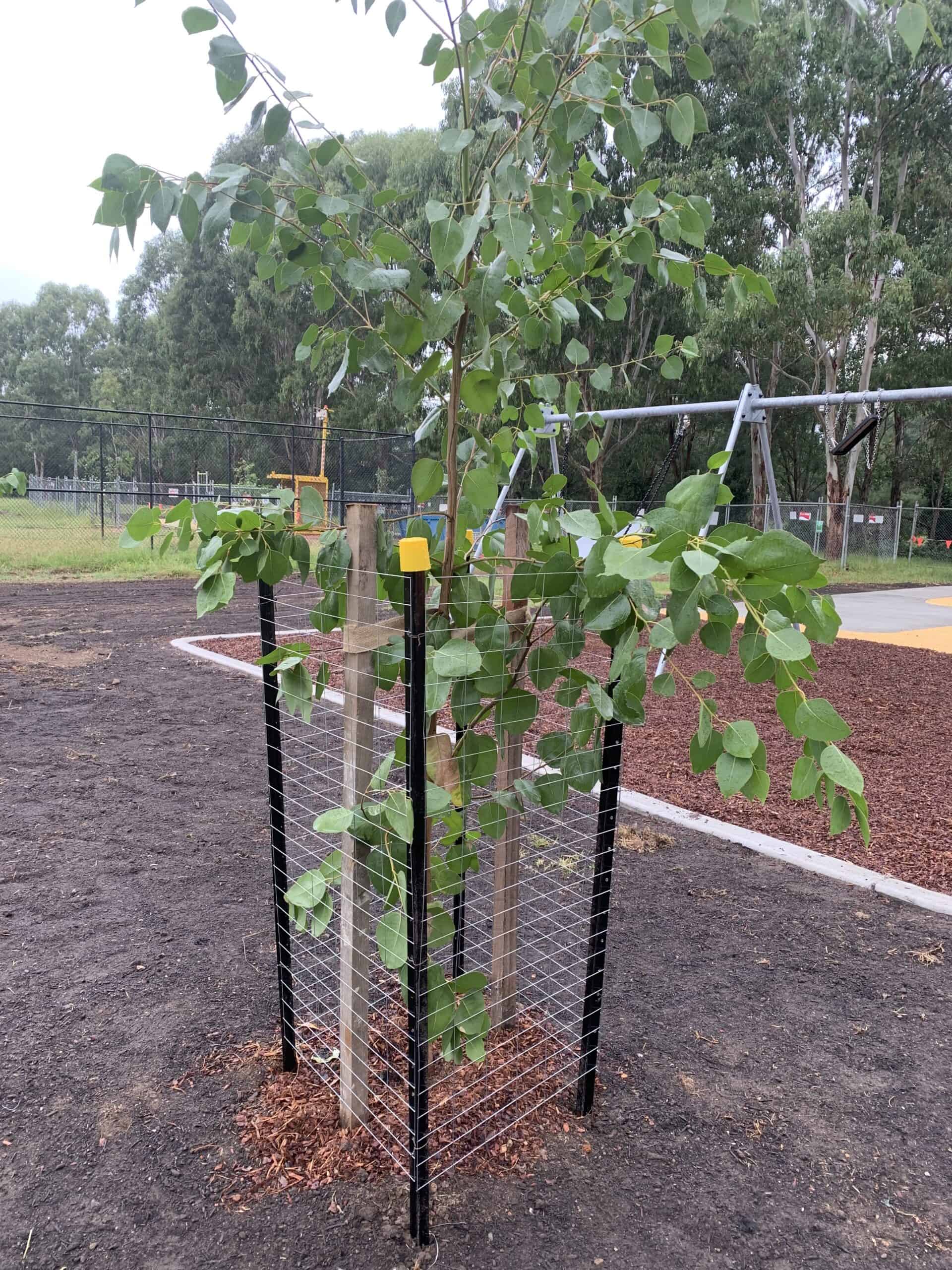
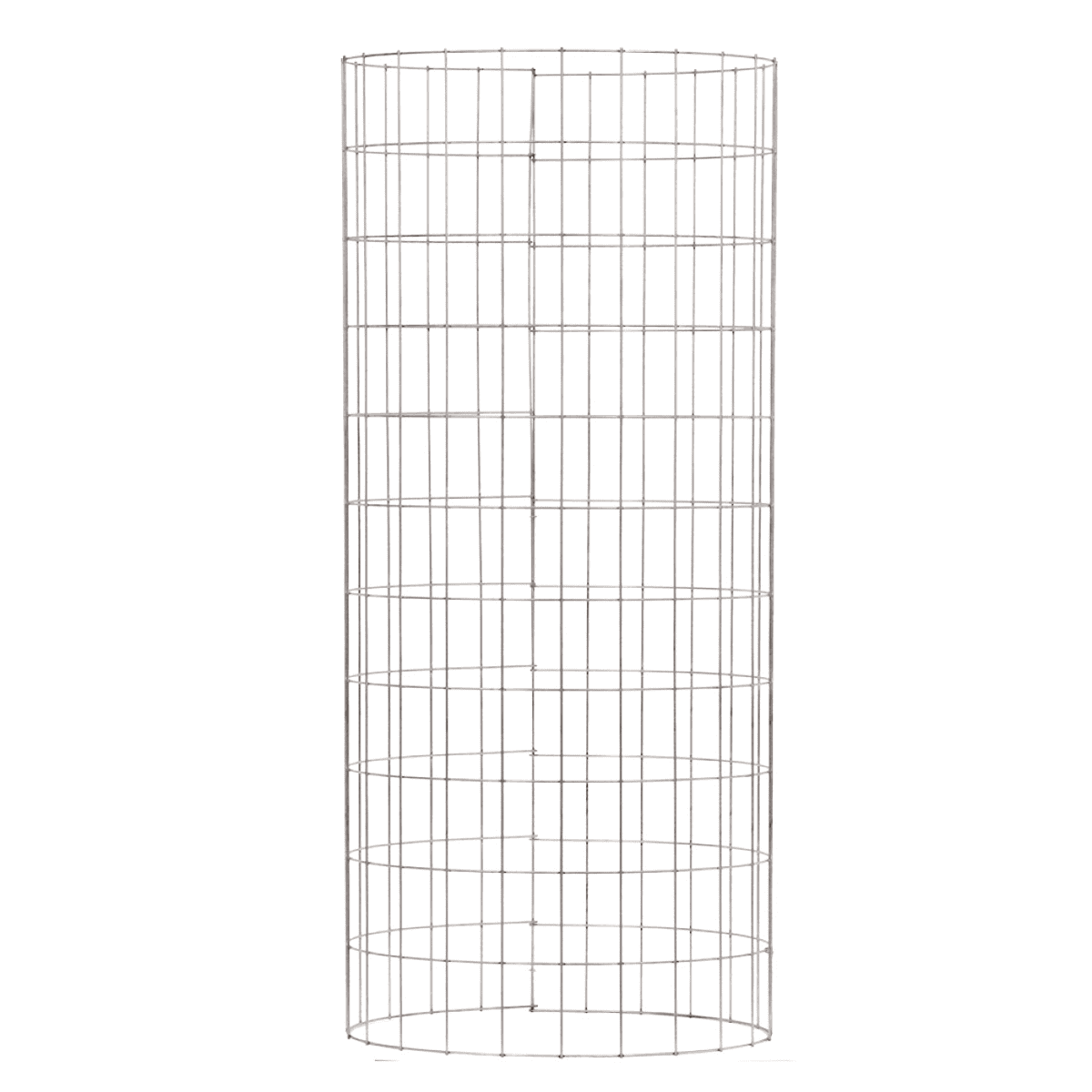
Wire plant protectors are physical barriers made from galvanised steel mesh, welded wire, or reinforced plastic mesh that surround young plants to shield them from damage. They work by creating a protective cage around the stem and lower foliage while still allowing sunlight, air, and rain to reach the plant.
The most common forms are cylindrical mesh guards that wrap around individual plants and dome-shaped wire cloches that sit over garden beds. Both are reusable across multiple planting seasons.
The choice between these depends on what you are protecting, what you are protecting it from, and whether the project is a backyard garden or a large-scale revegetation site. For a detailed comparison of every guard type, including corflute and plant sleeves, see our guide to choosing the right seedling protectors.
The specific guard you need depends on which animals are causing damage. Different species attack plants in different ways, and the guard specification has to match the threat.
Animal damage is not just cosmetic. Bark wounds create entry points for fungal and bacterial infections that can kill a young tree long after the animal has moved on. A single ring of stripped bark (known as girdling) cuts off the flow of nutrients between roots and canopy and will kill the plant outright. The CSIRO's revegetation research identifies browsing damage as one of the primary causes of seedling mortality in Australian restoration projects. Protecting seedlings early prevents both the immediate damage and the disease problems that follow.
Chemical sprays, netting, and companion planting all have their place, but none provide the consistent physical protection that wire plant protectors offer. A wire guard cannot be washed off by rain, blown away by wind, or outgrown by the animal you are trying to deter.
The Australian Department of the Environment recommends physical plant protection as the first line of defence for revegetation projects, particularly in areas with wallaby, rabbit, or possum pressure.
| Method | Animal protection | Wind protection | Lifespan | Reusable |
|---|---|---|---|---|
| Wire mesh guards | Strong | Moderate | 10+ years | Yes |
| Plastic mesh sleeves | Moderate | Good (solid types) | 3-5 years | Sometimes |
| Netting | Moderate | None | 1-2 years | No |
| Spray deterrents | Weak | None | Days | No |
| Companion planting | Weak | None | Ongoing | N/A |
Wire mesh guards are the only option that provides genuine long-term protection without ongoing maintenance or reapplication. A galvanised metal mesh tree guard will outlast the plant it is protecting, and because it stays intact when you remove it, you can relocate it to the next planting. Over several seasons that reusability makes wire guards the most economical option despite the higher upfront outlay compared to plastic sleeves or spray-on deterrents.
Wire plant protectors come in several forms, each suited to different plants and situations. The right choice depends on the size of your plants, the threats they face, and whether you need protection for 10 seedlings or 10,000.
Metal mesh tree guards are the workhorse of plant protection in Australia. Made from galvanised steel wire (1.5-2mm gauge), they form a rigid cylinder around individual trees and shrubs. The galvanising process coats the wire in zinc, which prevents rust and extends the guard's working life well beyond 10 years in most Australian conditions.
The open mesh design allows full airflow and sunlight while keeping rabbits, wallabies, and livestock away from the trunk and foliage. That ventilation matters more than most people realise. Solid guards trap moisture around the stem, which encourages fungal problems like collar rot, particularly in humid coastal areas and during wet winters. Wire mesh avoids that entirely. For a breakdown of when metal guards outperform other materials, see our guide to the best tree guards.
A lighter and more cost-effective option for large-scale plantings where hundreds or thousands of guards are needed. UV-stabilised plastic mesh guards break down over several years, which suits revegetation projects where the guards are designed to degrade once the plants are established.
For vineyards, orchards, and row crops, vine guards and tree sleeves offer a narrower profile that protects the stem without taking up space between rows. These work well for grapevines, olive trees, and citrus that are planted at close spacing and trained to a trellis or central leader.
Council and environmental projects increasingly specify guards that do not need to be collected at the end of their useful life. Green-POD enviro seedling guards are made from recycled cardboard and break down in the field over 12-18 months, which removes the cost of guard retrieval on remote sites. They suit low-threat environments where the main job is wind and frost shelter rather than animal exclusion. For sites with animal pressure, pair them with a wire mesh outer guard to get both protection and eventual breakdown.
Native Australian species have their own set of challenges in the first few years after planting. Eucalypts, acacias, banksias, and grevilleas all face browsing pressure from wallabies and possums, but they also tend to have thin, soft bark when young that is easily ring-barked by rabbits or rodents.
Wire mesh guards are the standard plant protector on revegetation and bush regeneration sites across Australia. The open mesh lets native seedlings harden off naturally in wind and sun rather than becoming leggy inside a solid sleeve, which is a common problem on exposed ridgelines and coastal plantings where the guard eventually comes off and the plant collapses because it never developed trunk strength.
Specifications that work for common native planting scenarios:
If you are planting eucalypt trees, getting the guard on at planting time is worth the extra few minutes. Coming back to retrofit guards after animals have already browsed the leader shoot means the tree will branch from lower down and may never develop the single-trunk form you wanted.
Vegetable gardens face a different mix of threats. Possums, rabbits, birds, and bandicoots are the usual culprits, and because vegetables are annuals or short-lived perennials, the protection needs to be easy to put on and take off through the growing season.
Wire cloches and DIY mesh cages are the most practical plant protectors for vegetables. A cloche sits over a single plant or a short row and lifts straight off at harvest time. For raised beds, bending welded mesh panels into an arch over the bed gives you a walk-in cage that keeps animals out while you work underneath.
The advantage of wire over bird netting alone is durability. Netting tangles, tears, and needs replacing every season. A wire frame lasts for years and you simply drape fresh netting over it if insect exclusion is needed. For winter vegetable plantings in frost-prone areas, the same wire frame can hold frost cloth instead of netting.
The best wire plant protector for your project depends on three things: what you are planting, what is threatening it, and how many plants you need to protect.
Not sure which guard suits your project? Contact the All Stake Supply team for advice on quantities and sizing. With 48 years of product knowledge, they can match the right protector to your conditions.
A wire plant protector only works if it stays upright and in position. Loose guards that blow over in wind or collapse under animal pressure defeat the purpose.
In windy or coastal areas, doubling up on stakes is worth the extra cost. A guard that falls over in a storm can crush the plant it was meant to protect.
For larger projects, hardwood stakes are the standard choice because they resist rot and termite damage better than pine. For more detail on staking techniques, including how to secure guards in rocky or sandy ground, see our tree guard installation guide.
In frost-prone areas or during the height of summer, wrapping the outside of a wire guard with shade cloth gives young seedlings extra protection from temperature extremes without blocking airflow entirely. Remove the cloth once the plant has hardened off.
Most plant protection failures come down to the same handful of errors. These are easy to avoid once you know what to watch for.
A good rule: check your guards at the start of each season. If the plant trunk fills more than two thirds of the guard diameter, it is time to remove or upgrade to a larger size.
The right size depends on the plant and the animal threat. For rabbits and small pests, a 600mm tall guard with tight mesh is enough. For wallabies and kangaroos, go with 1200mm or taller. The guard diameter should leave at least 50mm clearance around the stem on all sides so the plant has room to grow without pressing against the mesh.
Galvanised metal mesh guards last 10 years or more in most Australian conditions. The zinc coating prevents rust, so the guard stays structurally sound through years of sun, rain, and frost. UV-stabilised plastic mesh guards typically last 3-5 years before they start to degrade.
Yes. Metal mesh guards hold their shape when you remove them and can be relocated to the next planting. This makes them more economical over multiple seasons than single-use plastic guards. Plastic mesh guards can sometimes be reused if they have not degraded, but they lose rigidity after a few seasons.
Wire mesh guards with an aperture under 25mm will stop possums from reaching through to strip bark. However, possums can climb over the top of an open guard, so if possum browsing on the canopy is the problem, you may need a taller guard or a guard with a closed top for the first year until the plant grows above browsing height.
For backyard gardens and areas with rabbits or possums, 1.5mm galvanised wire is strong enough. In areas with kangaroos, deer, or livestock pressure, step up to 2mm gauge or heavier. Thicker wire resists bending and impact better, which matters when a large animal leans or pushes against the guard.
Remove the guard once the trunk is thick enough that the target animal can no longer damage it. For most native trees, that is when the trunk diameter fills about two thirds of the guard. Leaving a guard on too long risks girdling, where the mesh cuts into the expanding bark and restricts nutrient flow.
Wire mesh guards are the standard on Australian revegetation sites because the open mesh lets native seedlings harden off in wind and sun. Solid-walled guards can cause leggy, weak growth on exposed sites. For tube stock eucalypts, a 600mm metal mesh guard handles rabbit pressure and a 1200mm guard handles wallabies. Banksias and grevilleas need a wider diameter (350mm or more) to avoid compressing their spreading habit.
Wire cloches and mesh cages work well for vegetables. They keep possums, rabbits, and birds away from crops and are easy to lift off at harvest time. For added insect protection on brassicas, drape fine insect mesh over the wire frame. The wire structure lasts for years while the netting can be replaced cheaply each season.
Galvanised wire resists salt spray well. The zinc coating acts as a sacrificial layer that corrodes before the steel underneath, so galvanised guards typically last 8-10 years even in coastal conditions. Uncoated or powder-coated wire will rust much faster near the coast. If you are planting within direct salt-spray range, galvanised mesh is the right choice over painted or bare steel.
Push the guard 50-100mm into the soil so there is no gap at ground level. On hard or rocky ground where you cannot press the guard in, peg the base down with wire staples or bury the lower edge under a ring of soil or mulch. For persistent burrowers like rabbits, an L-shaped mesh skirt extending 150mm outward at the base makes digging underneath almost impossible.
All Stake Supply has stocked plant protection products from their St Marys NSW warehouse since 1976. With over 1,000 products in stock and delivery anywhere in Australia, they specialise in getting complete orders to site without the delays of partial shipments from multiple suppliers.
Browse the full product range online or contact the team for trade pricing and bulk orders.