Erosion control for landscaping and civil projects is the process of preventing soil loss due to forces such as wind and water. It protects exposed soil on construction sites, farms and landscaped areas.
Erosion control keeps soil in place. Sediment control retains soil after it moves: a fence catches sediment downstream, while vegetation or a blanket protects soil upstream.
Exposed soil can be detached by rain or wind and carried away by runoff. Understanding how to control soil erosion starts with identifying that cause, then choosing an erosion control method for the site. Australia faces particular challenges because of its variable rainfall, dispersive soils and extensive land clearing history, and the types of erosion impacting different Australian regions vary from coastal wave action to inland wind scour.
Losing topsoil makes planting harder, and sediment runoff can damage waterways and drainage. Addressing exposed soil early reduces the risk of having to repair the same ground after rain.
The main soil erosion control methods protect the surface, establish vegetation or manage the water and wind that move soil. Sediment barriers are usually added to catch material that escapes those controls.
| Method | Main role | Limitation to check |
|---|---|---|
| Plants and mulch | Cover soil and support root growth | Plants need time to establish; loose mulch can wash away |
| Jute or coir blanket | Protect an exposed planted surface | Fixing, soil contact and flow rating matter |
| Coir log | Slow shallow flow in a suitable layout | Needs secure anchoring and a suitable flow path |
| Silt fence | Retain sediment from sheet flow | Unsuitable across concentrated channels |
| Rock armouring | Protect designed high-flow areas | Requires appropriate sizing, foundation and drainage |
Vegetation, including grasses, shrubs, and trees, stabilises soil with their roots, reducing erosion. By absorbing water and slowing runoff, plants protect soil and provide natural erosion control.
Tree guards for establishing young plants can protect seedlings while roots develop. Plant ties, stakes and other plant establishment supplies support new planting; dense ground cover provides more continuous soil protection than scattered young trees.
Applying mulch, straw, or biodegradable erosion control mats to exposed soil protects the surface from direct rainfall and slows water runoff. Mulching helps soil retain moisture and encourages plant growth while reducing weed competition.
Where weeds compete with new planting, the 1.83m wide woven weed mat is a weed-suppression option. It is not interchangeable with a slope-rated erosion blanket: coconut fibre for landscaping and erosion control has a different role in surface protection.
Understanding how woven geotextile fabric separates soil and aggregate helps avoid using a separation fabric where an exposed erosion blanket is needed.
Geotextiles have different jobs, including filtration, separation and reinforcement. A drainage filter fabric or woven separator should not be assumed to support seed growth or withstand exposed runoff simply because it is called geotextile.
Natural fibre blankets made from jute or coir protect exposed soil while vegetation establishes. The 750gsm heavy-duty jute matting roll is one option to assess against your slope and fixing requirements; using coir logs for erosion control involves a different placement and anchoring method. For a side-by-side look at the fibre blankets available, see the guide to erosion control matting types and when to use each one.
Silt fences are temporary sediment barriers positioned to intercept shallow sheet flow from disturbed ground. They hold back runoff so sediment can settle, but they are not designed to dam a drain, creek or concentrated water channel.
The standard green 100m silt fence roll supplies fabric for a sediment barrier. Performance depends on its location, support posts, buried lower edge and maintenance; buying a roll alone does not establish compliance or remove all fine sediment. Where concentrated flow collects at a low point, a sediment trap designed for the expected volume may be more appropriate than a fence line.
For steeper slopes, erosion control blankets made from biodegradable materials like coir or jute are particularly useful. These blankets cover the soil, offering a protective layer that helps prevent erosion while supporting vegetation establishment.
Natural fibre mats gradually break down, so planting needs to establish before the cover loses strength. Check the entire product construction, including any netting, rather than assuming every mat leaves no synthetic material behind.
In areas with severe erosion, gabions (wire baskets filled with rocks) and riprap (layered stone) are commonly used. These are especially useful for stabilising riverbanks, stabilising a steep bank, and steep slopes where soil erosion is particularly aggressive.
Rock protection needs a design suited to the expected flow, supporting soil and drainage. A slumping bank or an undercut waterway edge needs professional assessment; a surface blanket cannot repair deep instability.
Weed mat, geotextile fabric and erosion control blankets are often confused because they look similar on the roll. Each solves a different problem, and substituting one for another is a common and costly mistake on site.
| Product type | Primary purpose | Supports seed growth | Suits exposed slopes | Typical material |
|---|---|---|---|---|
| Weed suppression mat | Block light to prevent weed growth under mulch or gravel | No | No (not rated for runoff) | Woven polypropylene |
| Filtration or separation geotextile | Separate soil layers or filter water in drainage structures | No | No (buried, not surface-exposed) | Woven or non-woven synthetic |
| Erosion control blanket | Protect exposed soil while vegetation establishes | Yes (designed for it) | Yes (rated by slope and flow) | Jute, coir or blended fibre |
| Sediment fence or barrier | Catch soil particles in sheet-flow runoff after they move | No | No (placed at the base of a slope) | Geotextile on support posts |
The table is a starting point for selecting the right product category. Within each category, individual products vary by weight, fibre type and flow rating, so check the specification against your site conditions before ordering.
Selecting appropriate erosion control products for your site depends on slope, soil, water flow and the time needed for planting to establish. Where revegetation includes seedlings, choosing tree guards for your project is a separate part of protecting the planting.
For broad planting areas, the 5m wide heavy-duty woven weed mat offers wider weed-suppression coverage. Select erosion protection separately where flowing water could undermine or lift the fabric.
All Stake Supply supplies erosion protection and landscape establishment materials. Compare intended uses and installation requirements: material weight alone does not establish suitability.
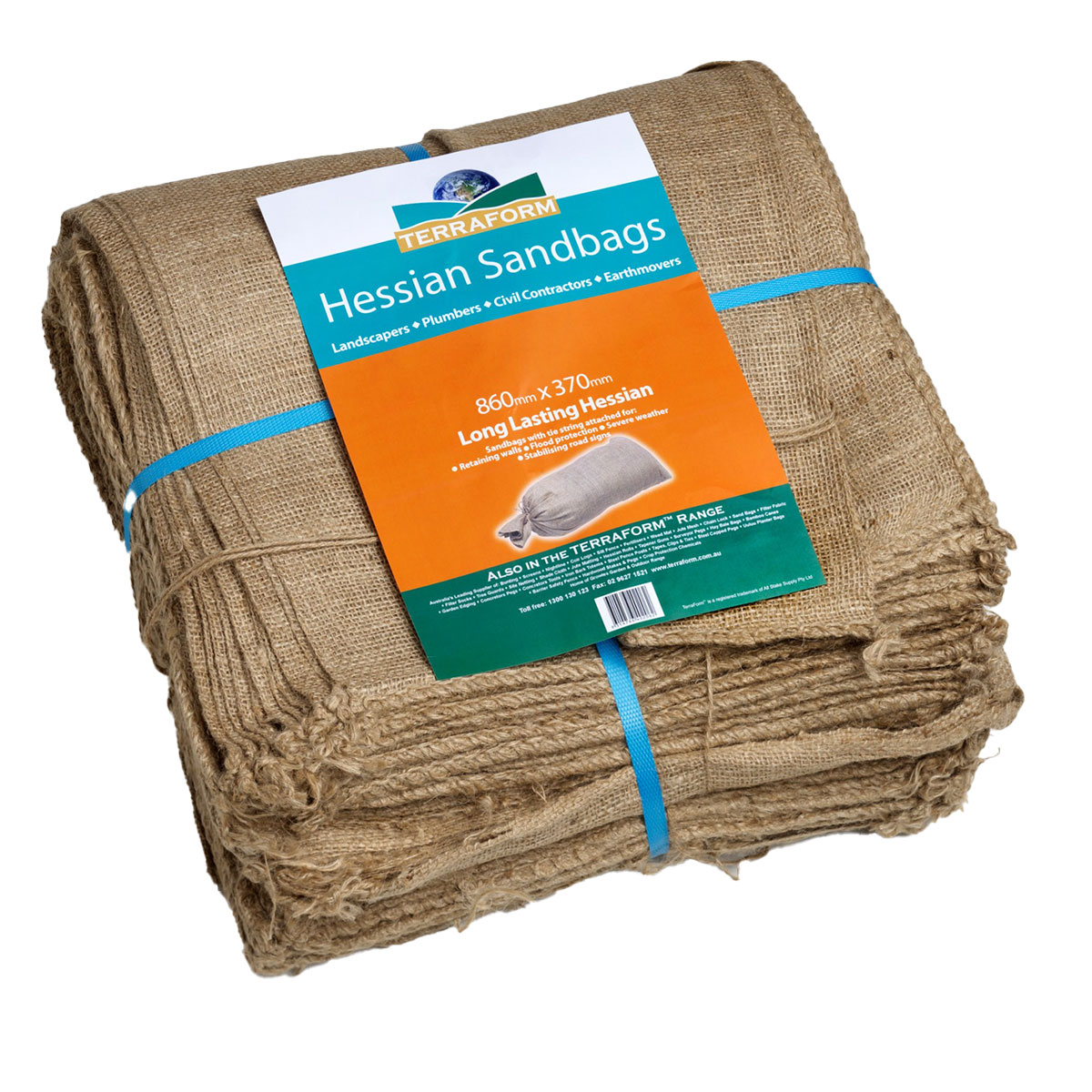
Where a design calls for a fibre barrier, the 200mm x 2m coir log is a product option to check against the required flow conditions and anchoring details. hessian sandbags in a 1,000-pack can be filled for specified temporary works; they do not replace slope stabilisation or drainage design.
Address the cause of soil loss before installation. Covering a bank helps little if concentrated runoff still discharges onto it.
Plan drainage, protect the soil and maintain controls until permanent cover establishes. Keep access routes away from planting and repair exposed patches promptly.
A 1:3 batter cleared for a retaining wall illustrates how several controls work together rather than replacing each other. This is a conceptual walkthrough, not a substitute for a site-specific design.
Each layer addresses a different part of the problem. Remove the upslope diversion and the blanket takes water it was never rated for. Remove the toe barrier and sediment reaches the drain unchecked. A single product cannot do the job of a system.
Environmental erosion control protects exposed ground and reduces sediment reaching drains and waterways. In Australia, the practical approach is site-specific: assess the soil and runoff before choosing controls.
The NSW Blue Book guidance for erosion and sediment control supports management of land disturbance. Apply it alongside your project requirements; a product purchase is not a compliance plan.
After bushfires, large areas of ground lose their protective canopy and leaf litter at once, making them especially vulnerable. Understanding how bushfires impact soil erosion and vegetation recovery helps when planning post-fire revegetation and ground cover.
Erosion control systems combine surface protection, runoff management and sediment capture. EPA Victoria's guidance on managing erosion and sediment recommends assessing site risks and combining suitable controls.
A newly planted bank may need an upslope diversion, secured fibre blanket and downslope sediment barrier. This illustrates different control functions; it is not a design for every bank.
Ordering erosion control products and engaging an erosion control service are two different things, and the distinction matters when you are planning a project budget.
A materials supplier stocks the blankets, fences, logs and anchoring hardware. An erosion control contractor assesses the site, designs the layout, installs the controls and may maintain them afterwards. Some projects need both: a contractor designs the system, and the materials come from a supplier who can deliver the full order in one shipment.
All Stake Supply is a materials supplier with over 48 years of product knowledge for Australian conditions. The team can help you match products to your application and quantities, but the design of a complete erosion and sediment control system sits with your project engineer, landscape architect or environmental consultant.
Erosion control reduces soil loss on landscape banks, construction sites and revegetation areas, limiting sediment movement beyond the work area.
Erosion control protects soil before it moves. Sediment control retains material after it moves; sites discharging muddy runoff may need both.
Natural erosion control uses vegetation, mulch, jute or coir. Fibre cover protects ground while roots establish, provided it suits the flow and site.
Weed mat primarily suppresses weeds. Check its intended use and fixing requirements; do not assume it protects exposed soil like an erosion blanket.
Jute can protect a suitable planted surface. Concentrated runoff, unstable fill or deep ground movement require assessment beyond choosing a heavier roll.
Bare ground, disturbed soil, loss of plant cover and poorly directed runoff commonly cause landscape erosion. Identify the water source before replacing soil.
Check for lifting blankets, exposed soil, damaged barriers and sediment build-up after rain. Repair defects and maintain temporary protection until permanent cover establishes.
Services may include assessment, design, installation or maintenance, depending on the provider. Material supply is separate from designing and installing a complete system.
Compare soil, slope, runoff and planting against your specification. Include anchors, support posts and overlaps in the order.
Most Australian councils require one before earthworks that disturb more than a set area of ground. The plan maps drainage, identifies controls and sets inspection schedules. NSW projects typically follow the Blue Book framework. All Stake Supply can help you source the materials your plan specifies, but writing the plan itself is the responsibility of your engineer or environmental consultant.
Erosion control matting is a natural fibre blanket (jute or coir) designed to protect soil while seeds germinate and roots establish. Weed mat is a woven or non-woven synthetic fabric designed to block light and suppress weed growth. Laying weed mat on a bare slope exposed to runoff does not provide the same protection as a rated erosion control blanket.
Construction sites install controls before clearing begins. Silt fences and sediment traps catch runoff at the boundary, erosion blankets or hydromulch protect exposed batters, and stabilised access tracks stop vehicles tracking soil off site. Controls stay in place until permanent landscaping or hard surfaces replace them.
For help comparing erosion control materials, contact the team about erosion control materials with your site dimensions, intended application and any designer specifications.