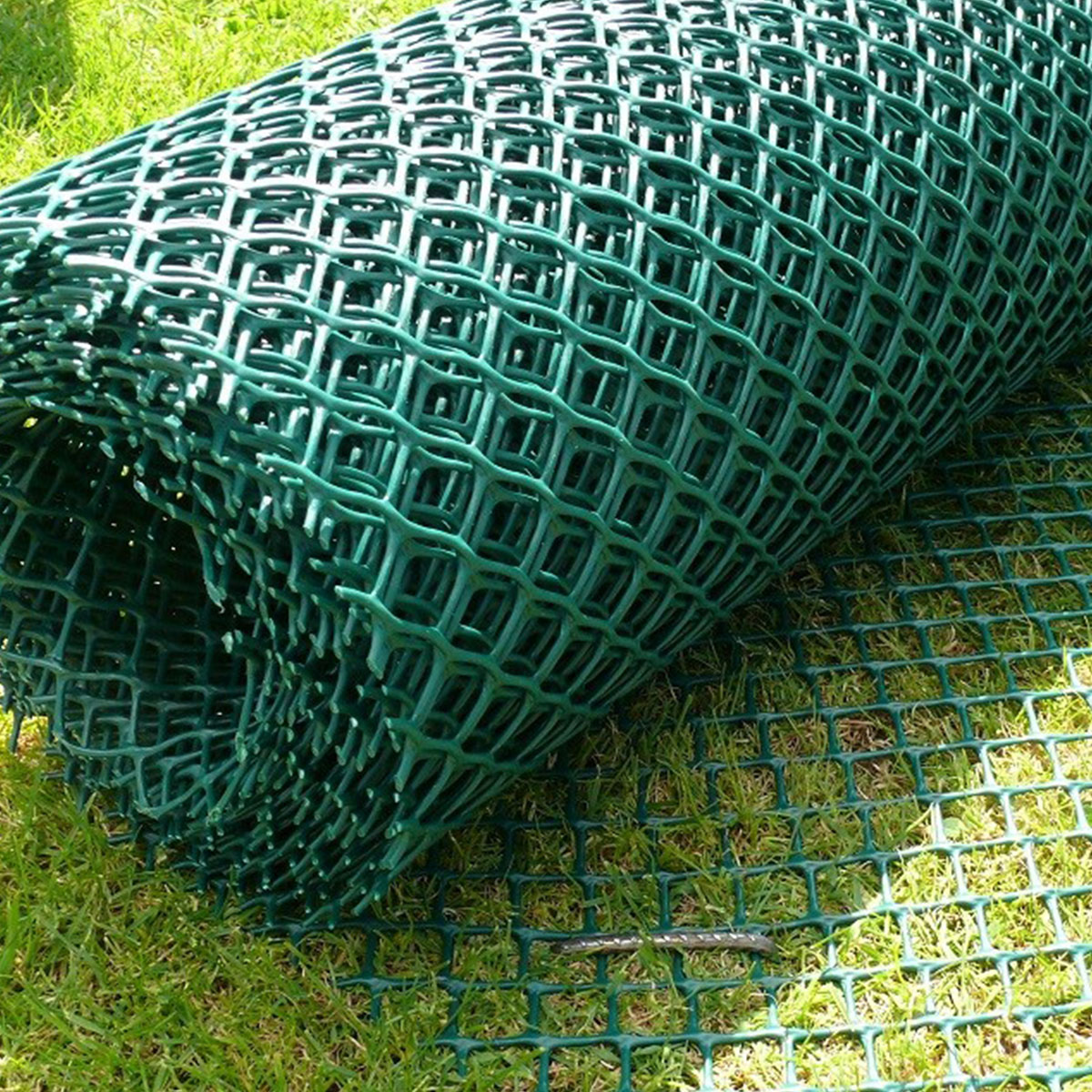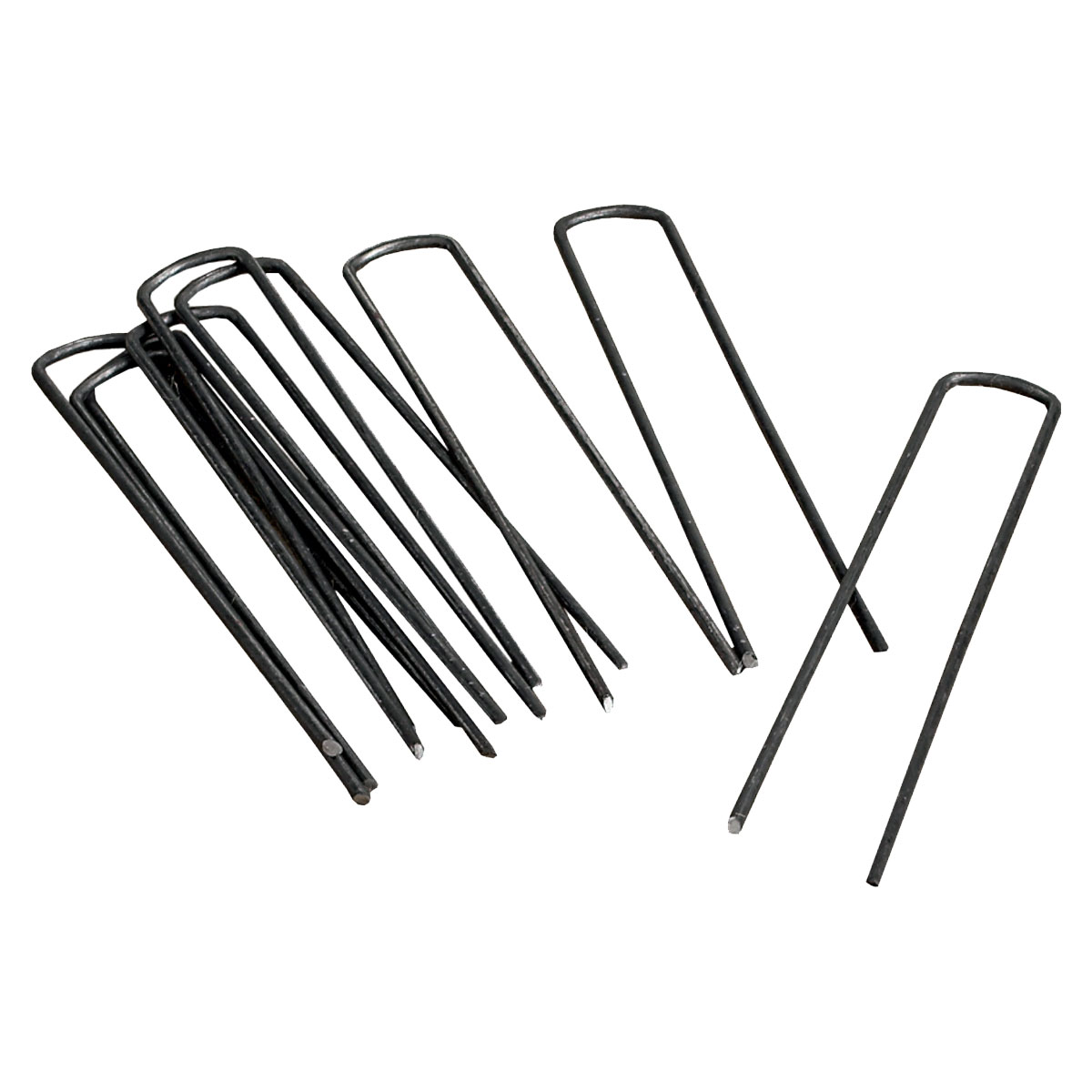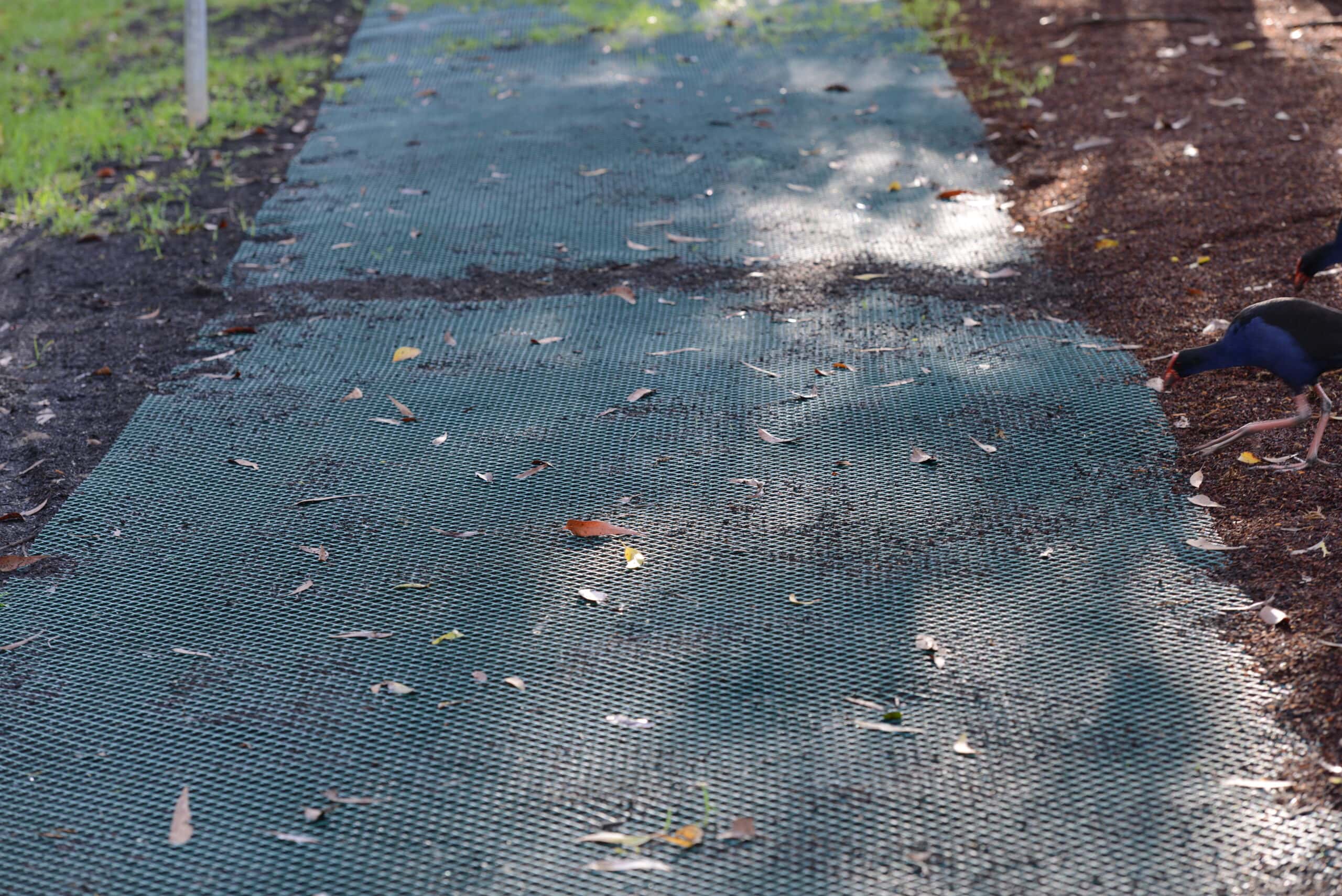
At Newcastle University, turf reinforcement mesh was used to reinforce a grassed walking and running route linking exercise stations. All Stake Supply’s original project account records mesh installed over existing turf, with steel pins holding it in place while the grass grew through.
Provide a grass reinforcement solution for the University’s running track, which links exercise stations positioned intermittently along a set route. The grassed track needed reinforcement to withstand repeated student foot traffic while retaining its grass surface.
The selected solution was extruded plastic turf reinforcement mesh, laid onto the existing grass and secured with steel fastening pins. The original account describes rolls measuring 2 m by 30 m.
The current TR4 turf reinforcement mesh in 2 m by 30 m rolls is made from 100% recycled, UV-stabilised HDPE and is listed for pedestrian applications. Its product page specifies a minimum of five steel fastening pins per square metre.
All Stake Supply’s original project account reported that the grass had grown through and knitted with the mesh within three months. It described a well-covered grass route that had withstood frequent student use, and identified secure pinning as an important part of the installation.
Other completed All Stake Supply projects provide further examples of the applications covered by the team.


The Newcastle project provides an example of reinforcement over existing turf. For another campus, start by walking the proposed route with the grounds team and noting where people actually travel, including shortcuts around exercise stations.
The All Stake Supply TR4 specification sheet says the mesh works best on reasonably flat, even, well-drained ground with established grass. It also lists 200 mm steel fastening pins as the securing method.
These are planning checks for a comparable installation. They are not a reconstruction of work carried out at Newcastle University, where the published record is brief.
For another example of grass reinforcement in a public recreation setting, compare the Crescent Amphitheatre project in Parramatta. Keep each project’s conditions separate when assessing whether its approach suits a campus path.
Measure each section of the proposed exercise route before ordering. A roll’s nominal area is only a starting point: bends, changes in width and the required joint layout affect how much of it can be used.
For shorter connections, compare TR4 turf reinforcement mesh in 1 m by 10 m rolls with the larger format described in this case study. Sketch the cuts first so the order reflects the route rather than a simple total-area estimate.
| Component | Role | Check before ordering |
|---|---|---|
| TR4 mesh rolls | Reinforce the existing grass surface | Route width, cutting layout and ground suitability |
| Steel fastening pins | Hold mesh against the ground | Specified length, holding conditions and fixing layout |
| Industrial snips | Cut mesh to the planned shape | Clean edges and the final connection details |
The 200 by 35 mm steel fastening pins in packs of 150 match the length listed in the specification sheet. Confirm the complete fixing specification with the supplier before purchasing.
If the installer proposes a different pin size, ask why it is needed and confirm compatibility first. The range includes 300 by 50 mm steel fastening pins, but these are not identified as the pins used at Newcastle University.
For trimming the mesh, 185 mm Black Panther Industrial Snips are listed by All Stake Supply for cutting grass reinforcement rolls. Plan cuts and edge fixings together, especially where the route changes direction.
The practical lesson recorded at Newcastle was the importance of pinning. For a similar installation, confirm pin spacing at edges and joints as well as across the mesh.
Use the product page’s minimum density as a quantity starting point, then confirm the layout for edges, joints and local ground conditions. Do not treat a total pin count as proof that the mesh is held down correctly everywhere.
The three-month observation from Newcastle is useful context, but it should not become the reopening date for another campus. Establishment needs to be assessed on that site, with attention to grass coverage and the installed surface.
Include the mesh route in the grounds team’s inspection schedule. A simple record of location, condition and action makes it easier to follow up recurring wear at the next inspection.
For handover, nominate a person to receive reports from students or maintenance staff and record how a section can be taken out of use while a defect is assessed. Make the location descriptions specific enough that someone unfamiliar with the work can find the affected area.
Photographs taken from the same marked locations can help the grounds team compare grass coverage during follow-up inspections. Keep those observations separate from assumptions about the mesh: a change in appearance should prompt a closer look at use and ground conditions before deciding on a repair.
Keep the handover information with the maintenance record: product grade, fixing instructions, route layout and supplier contact details. If use changes, such as a new vehicle crossing or a relocated exercise station, review that section before assuming the original specification still applies.
The original case study describes extruded HDPE turf reinforcement mesh supplied in 2 m by 30 m rolls. All Stake Supply’s current TR4 product page links to this Newcastle project as an application example.
Yes. The project account states that the mesh was laid over existing turfed areas and secured with steel fastening pins, allowing grass to grow through the openings.
The original account reported growth through the mesh within three months. That is the observation for this project; it does not establish a guaranteed period for other soils, seasons or maintenance arrangements.
Follow the current product instructions and a site-specific fixing layout. The TR4 product page’s minimum density is noted above, but the Newcastle case study does not record its actual pin spacing or total quantity.
The smaller TR4 format gives another cutting-layout option. Check the intended route width and connection details first; the dimensions of a roll should not determine how wide a campus route needs to be.
No. The documented brief concerns students walking and running along a grassed exercise route. Any vehicle use, different ground conditions or formal sports-surface requirements need their own assessment.
Bring a marked-up route plan, photographs of the ground and an outline of expected use when you contact the team about turf reinforcement. Include any vehicle crossings and the proposed work dates so the discussion covers both product selection and establishment.
You can also browse the full product range for your materials schedule once the mesh and fixing requirements are confirmed.