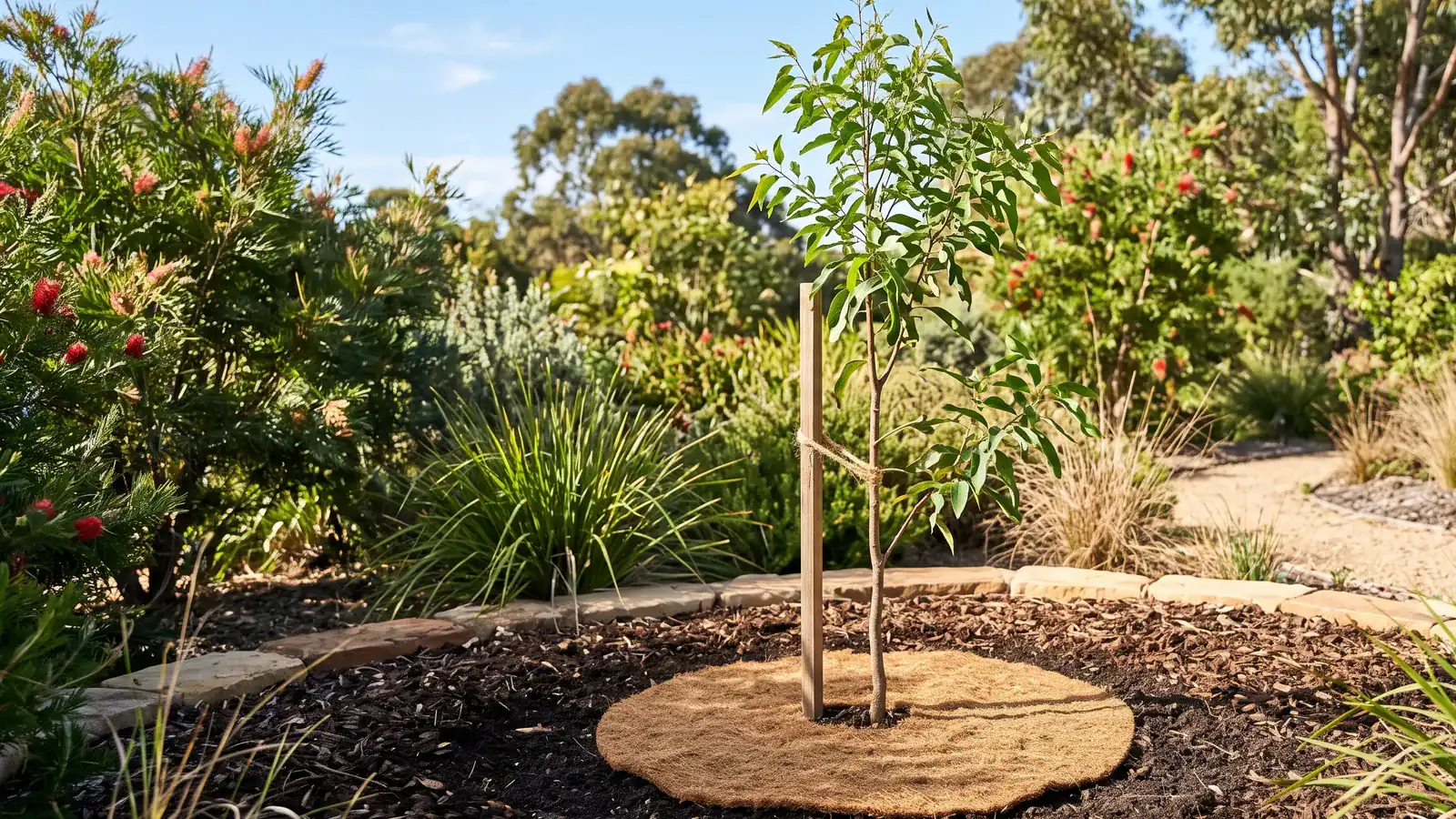
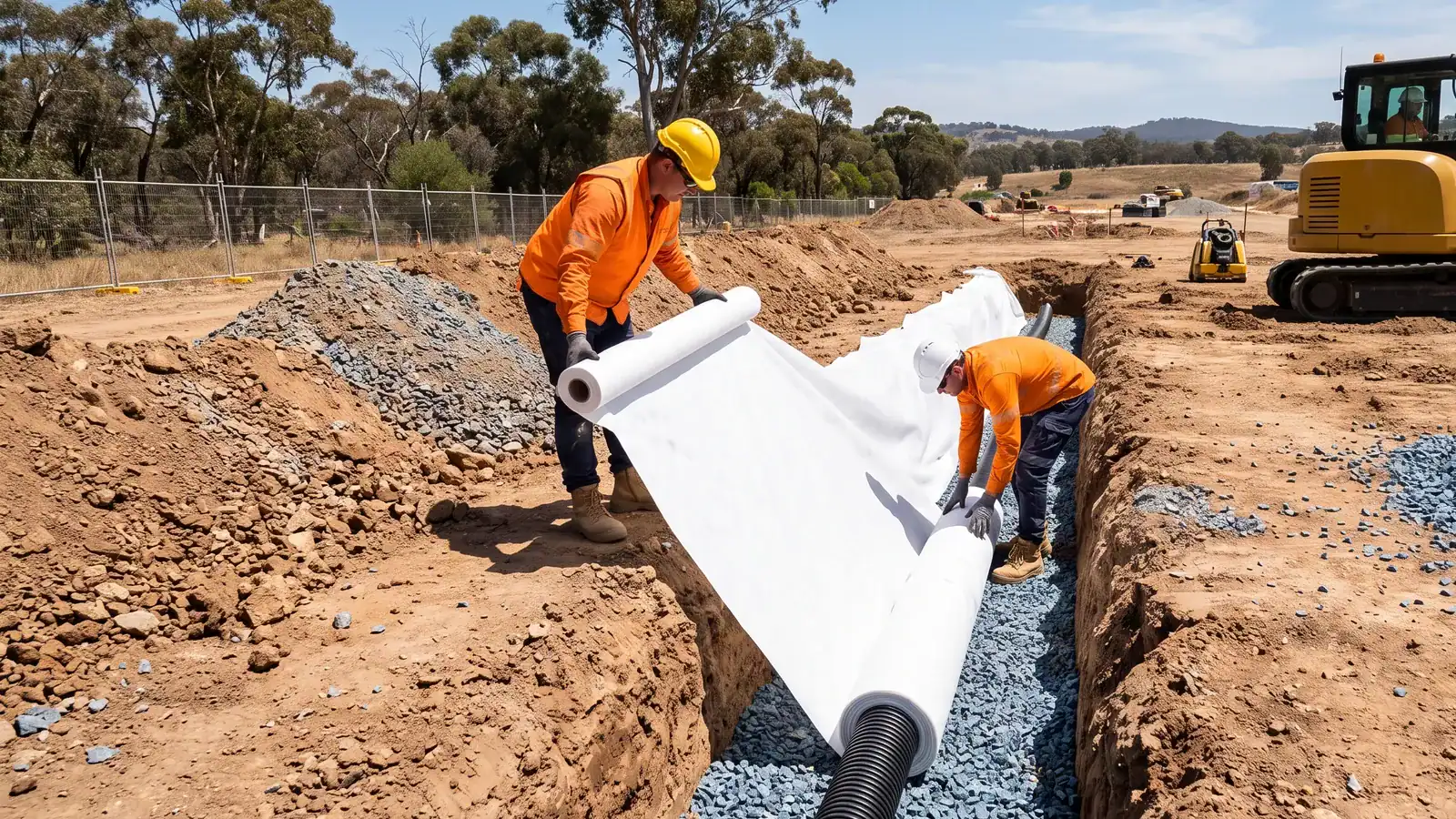
A mulch mat is one of the simplest ways to suppress weeds, retain moisture, and protect soil in any Australian garden or landscaping project. Whether you are planting a backyard garden bed or stabilising a steep slope on a civil site, the right mulch mat saves hours of maintenance and keeps your soil in better condition year after year.
This guide explains what a mulch mat is, the different types available, and how to choose the right one for your application. All Stake Supply stocks woven, jute, and coir mulch mats at their St Marys NSW warehouse, with delivery anywhere in Australia.
A mulch mat is a permeable fabric barrier placed on the soil surface to block sunlight and prevent weed germination. Unlike solid plastic sheeting, a quality mulch mat allows water, air, and nutrients to pass through to the soil below.
The term "mulch mat" is an umbrella that covers several product types. Synthetic woven polypropylene (commonly called weed mat), biodegradable jute matting, coconut fibre coir rolls, and pre-cut tree rings all fall under this category.
The critical distinction is permeability. Plastic sheeting suffocates soil and creates waterlogging. A proper mulch mat breathes, letting your soil stay healthy underneath.
Choosing the right mulch mat depends on your project type, how long you need it to last, and whether you prefer a synthetic or biodegradable option.
Woven poly weed mat is the workhorse of commercial landscaping. UV stabilised and available in weights from 85gsm to 110gsm, it resists tearing and lasts 10 to 15 years when covered with mulch. All Stake Supply's 85gsm woven poly weed mat suits standard garden beds and paths, while the 110gsm rolls handle driveways and heavy-traffic areas.
Jute matting is made from natural hessian fibres and decomposes into the soil over 12 to 24 months. As it breaks down, it adds organic matter and improves soil structure. Standard 620gsm jute matting is ideal for revegetation and slope stabilisation, while thick 750gsm jute rolls provide extra weed suppression on challenging sites.
Slitted jute options like the slitted jute matting roll come with pre-cut planting holes, saving time during tube stock installation on revegetation projects. For more on jute applications, see our guide to combating weeds with jute matting.
Coir matting is woven from coconut fibre and lasts 18 to 36 months depending on weight. It is particularly effective for erosion control on slopes and waterway banks because the fibres hold soil in place while vegetation establishes. All Stake Supply carries coir matting from 400gsm through to 900gsm for different project demands.
For a detailed comparison, read our coir matting guide for erosion control projects.
Pre-cut jute mats are square or circular pieces placed around individual plants and trees. They suppress weeds in the root zone, retain moisture, and protect trunks from mower and whipper-snipper damage. 370mm jute weed mats suit tube stock plantings, while 600mm mats work for larger plants.
Water saver versions like the jute water saver weed mats include a built-in moisture barrier layer that reduces evaporation around newly planted trees and shrubs.
A mulch mat does more than block weeds. The right product improves your soil conditions and reduces ongoing maintenance costs.
| Benefit | How It Works | Typical Result |
|---|---|---|
| Weed suppression | Blocks UV light to prevent germination | 85 to 95% reduction in weeds |
| Moisture retention | Reduces surface evaporation | Up to 50% less water lost from soil |
| Temperature regulation | Insulates soil from direct sun | Up to 10 degrees C cooler in summer |
| Erosion prevention | Holds topsoil in place during rain | Prevents washout on slopes and embankments |
| Soil health (biodegradable) | Decomposes and adds organic matter | Improved soil structure and microbial activity |
| Reduced maintenance | Less weeding, less watering | Fewer labour hours per season |
Biodegradable mulch mats have an added advantage. As jute and coir fibres decompose, they create habitat for earthworms and beneficial microorganisms. This builds soil carbon over time and improves the growing environment for your plants. Research from the CSIRO's soil science division confirms that maintaining organic matter inputs is critical for long-term soil health in Australian landscapes.
Pro tip: Always cover your mulch mat with 50 to 75mm of organic mulch or decorative aggregate. This protects the mat from UV degradation, extends its lifespan by 40 to 60%, and improves the visual appearance of your garden bed.
People often use "mulch mat" and "weed mat" interchangeably, but there is a distinction. Mulch mat is the broader category that includes all permeable ground covers designed to suppress weeds and protect soil. Weed mat typically refers specifically to synthetic woven polypropylene fabric.
Which one you need depends on whether you want a permanent synthetic solution or a biodegradable option that improves your soil as it breaks down. For a deeper look at synthetic weed mat, read our guide on what a weed mat is and how it works.
GSM (grams per square metre) is the standard measure of mulch mat weight and durability. Higher GSM means a thicker, more durable mat.
The choice between biodegradable and synthetic depends on your project goals and how long you need the mat to last.
Australian conditions note: In tropical and high-rainfall areas of Queensland and northern NSW, biodegradable mats decompose faster. Use a heavier GSM (750gsm jute or 900gsm coir) in these regions. In arid inland areas, synthetic woven poly is often the better choice because natural fibres dry out and become brittle without consistent moisture. The Australian Department of Climate Change, Energy, the Environment and Water provides guidance on erosion control standards that may apply to your project.
Ordering the right amount of mulch mat avoids waste and delays. Use this simple formula.
For example, a garden bed measuring 8m x 3m is 24 square metres. Adding 20% for overlaps brings it to 28.8 square metres. A standard 1.83m x 50m roll of woven poly weed mat covers 91.5 square metres, so one roll would be more than enough for this bed with plenty left for other areas.
For larger projects or to get advice on the right product, contact the All Stake Supply team for trade pricing and bulk orders.
Laying a mulch mat properly makes the difference between years of low-maintenance weed control and a mat that shifts, tears, or lets weeds through at the edges.
For the full step-by-step process with detailed instructions, read our complete guide on how to install weed mat. That guide covers site preparation, tool requirements, and overlap specifications in depth.
To understand how long your chosen mat will last under Australian conditions, see how long weed mat lasts in Australian conditions.
Mulch mat is the broader term covering all permeable ground fabrics designed for weed suppression and soil protection. Weed mat is one type of mulch mat, typically referring to synthetic woven polypropylene. The mulch mat category also includes biodegradable options like jute matting and coir rolls that add organic matter to the soil as they decompose.
Synthetic woven polypropylene mulch mats last 10 to 15 years when covered with mulch. Biodegradable jute mats last 12 to 24 months, and coir mats last 18 to 36 months. These shorter lifespans are by design, as biodegradable mats are meant to decompose and improve the soil. Covering any mat with 50 to 75mm of mulch extends its life by 40 to 60%.
Yes. Adding 50 to 75mm of organic mulch or decorative gravel on top of your mulch mat is recommended. The covering protects the mat from UV degradation, extends its lifespan significantly, and improves the appearance of your garden bed. An exposed mat breaks down faster from sun exposure.
Yes. Cut an X-shaped slit in the mat and fold the flaps back to create a planting hole. Leave a 20mm gap between the plant stem and the mat edges to prevent collar rot. For large-scale revegetation projects, pre-slitted jute and coir mats are available with planting holes already cut at regular intervals.
Synthetic mulch mats can limit organic matter reaching the soil over many years, which may reduce soil biology in the long term. Biodegradable mats made from jute, coir, or hemp actively improve soil health as they decompose, adding organic carbon and creating habitat for earthworms and beneficial microorganisms. For vegetable gardens and areas where soil health is a priority, biodegradable options are the better choice.
For light domestic use in flower beds and vegetable patches, 50gsm is sufficient. Standard garden beds, paths, and around trees require 85 to 110gsm. Heavy-duty commercial applications like driveways and construction sites need 120gsm or heavier. For biodegradable erosion control, jute and coir mats are available in 400 to 900gsm, with heavier weights lasting longer and providing more erosion resistance.
All Stake Supply has been supplying environmental terrain solutions since 1976. Browse the full mulch mat and weed mat range online, or contact the team for trade pricing and bulk orders. With over 1,000 products in stock at their St Marys NSW warehouse, All Stake delivers complete orders anywhere in Australia.
View the full product range or explore the erosion control products for coir and jute options.