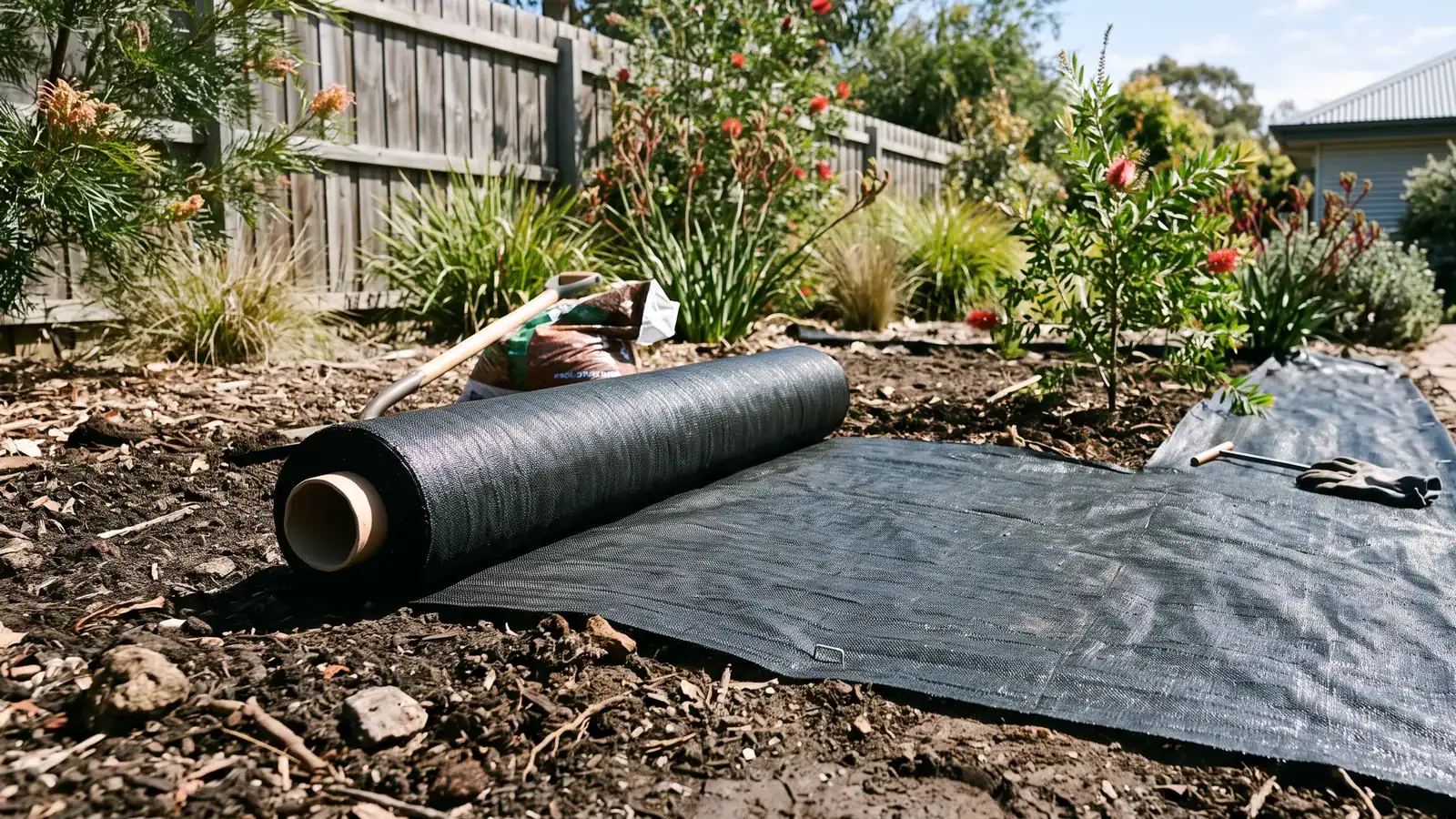
A heavy duty weed mat is any woven landscape fabric rated 100gsm or above, built to handle foot traffic, UV exposure, and years of outdoor use.
Standard 85gsm weed mat works fine under garden mulch where nobody walks. But put that same mat under a gravel driveway, a nursery potting area, or anywhere with regular foot traffic, and it tears within a season.
This guide explains the GSM ratings that separate standard from heavy duty, which weight suits which job, and how to install it so it actually lasts.
All Stake Supply stocks woven poly weed mat in 85gsm and 110gsm rolls alongside erosion control fabrics for larger civil and landscaping projects.
GSM (grams per square metre) is the single number that determines whether a weed mat counts as heavy duty. Standard residential weed mat sits around 70 to 85gsm. Heavy duty starts at 100gsm and the most common commercial-grade products are rated at 110gsm.
The difference comes down to three things: thread density, UV stabiliser concentration, and tear resistance. A 110gsm mat uses a tighter weave (typically around 96 x 44 threads per 10cm) compared to a looser 85gsm weave. That tighter construction means it holds up under pressure without stretching or splitting.
The key specs that define heavy duty weed mat:
If a product does not list its GSM rating, treat it with suspicion. Reputable manufacturers print it on the roll label.
Choosing the right GSM depends entirely on what is going on top of the mat and how much traffic it needs to handle. The table below breaks down the three common weight classes and what each is built for.
| GSM Rating | Classification | Best for | Expected lifespan |
|---|---|---|---|
| 70 to 85gsm | Standard | Garden beds under mulch, light residential use | 3 to 5 years |
| 100 to 110gsm | Heavy duty | Nurseries, under decking, gravel paths, commercial landscapes | 8 to 12 years |
| 120gsm+ | Extra heavy | Driveways, machinery areas, large-scale civil projects | 12 to 15+ years |
Lifespan estimates assume the mat is covered (mulch, gravel, or soil). Weed mat left exposed to direct UV degrades faster regardless of GSM. Always cover your mat within a few weeks of laying it.
Not every project needs 110gsm. A backyard garden bed with 75mm of pine bark mulch over the top will do perfectly well with an 85gsm mat. The mulch protects it from UV and nobody is walking on it.
Heavy duty becomes the right choice when any of these apply:
For most residential landscaping projects, the 85gsm woven poly weed mat does the job well. Step up to 110gsm for paths, nurseries, and commercial applications where longevity matters.
Weed mat works by blocking sunlight. Weeds germinate when seeds in the soil receive light, moisture, and warmth. Remove the light and germination stops. The woven polypropylene blocks incoming UV while still allowing rainwater and air to pass through to the soil below.
Heavy duty mat does this better than standard for one simple reason: the tighter weave blocks more light. An 85gsm mat with a looser weave can allow pinprick light through, which is enough for aggressive weeds like couch grass and nutgrass to push through over time.
No weed mat is permanent. Seeds landing on top of mulch or gravel will still germinate in the organic matter that accumulates above the mat. Annual maintenance (topping up mulch, pulling surface weeds) is still necessary.
Installation makes or breaks a weed mat project. A 110gsm mat installed poorly will underperform an 85gsm mat installed well. The most common failure points are poor overlap, inadequate pinning, and gaps around obstacles.
Follow these steps for a lasting installation:
All Stake Supply carries wide 3.66m rolls that reduce the number of joins on larger projects, which means fewer weak points.
Australia's UV index regularly sits above 11 during summer, which is among the highest in the world. Standard weed mat rated for European or North American conditions will break down within one to two years of Australian sun exposure.
Look for products specifically tested and rated for Australian UV conditions. The Australian Department of the Environment does not regulate weed mat directly, but UV stabilisation testing follows Standards Australia guidelines for outdoor plastic products.
For large-scale erosion control and revegetation projects that need both weed suppression and soil stabilisation, dedicated erosion control products like coir matting and jute mesh are better suited than weed mat alone.
For residential garden beds under mulch, 85gsm is sufficient. For paths, nurseries, under decking, or any area with foot traffic, step up to 100 to 110gsm. Driveways and machinery areas should use 120gsm or heavier.
The strongest weed barriers are woven polypropylene mats rated 110gsm or above with UV stabilisation. These resist tearing, handle foot and vehicle traffic, and block over 99% of light. Non-woven geotextile is physically strong but blocks water, making it unsuitable as a weed barrier.
Yes, provided they are installed correctly and covered with mulch or gravel. They block light to prevent weed germination below. Weeds can still grow on top of accumulated organic matter, so annual maintenance is necessary.
For any installation where replacement is difficult (under decking, paving, gravel driveways), heavy duty pays for itself by lasting two to three times longer than standard. For a simple garden bed that is easy to access, standard 85gsm is fine.
Yes. Heavy duty weed mat is commonly used under synthetic turf as a weed barrier. Use 100gsm minimum and ensure the drainage rate is sufficient, as artificial turf requires good water flow underneath.
A quality 110gsm UV-stabilised weed mat covered with mulch or gravel will last 8 to 12 years in Australian conditions. Left uncovered in direct sun, even heavy duty mat degrades significantly within 2 to 3 years.
All Stake Supply has stocked weed control products from their St Marys warehouse since 1976. Every order ships complete, guaranteed, so your project is not stalled waiting for partial deliveries.
110gsm Heavy Duty Woven Poly Weed Mat:
85gsm Standard Woven Poly Weed Mat:
Jute Weed Mats for Revegetation:
Browse the full weed mat range at All Stake Supply or contact the team for trade pricing and bulk orders.