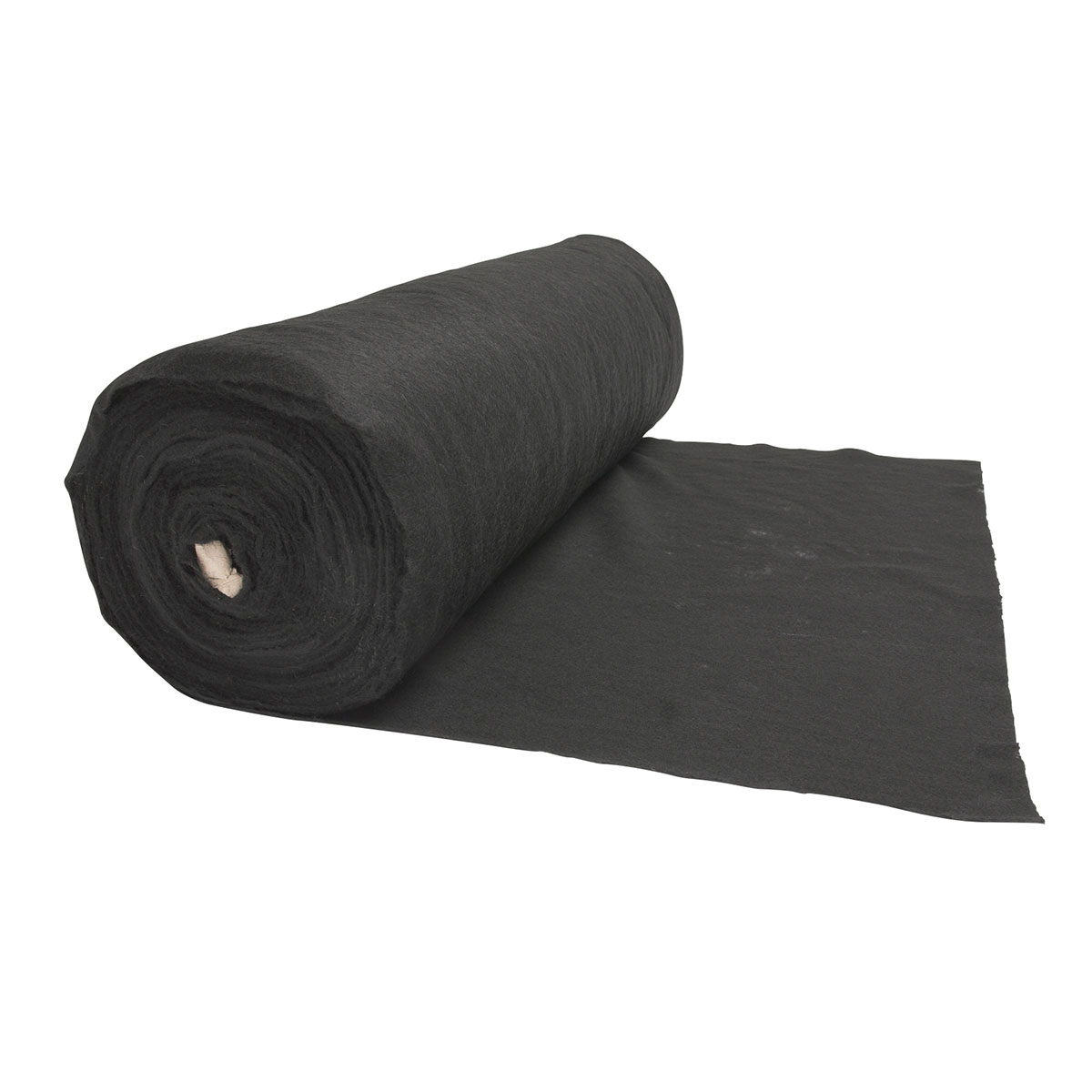
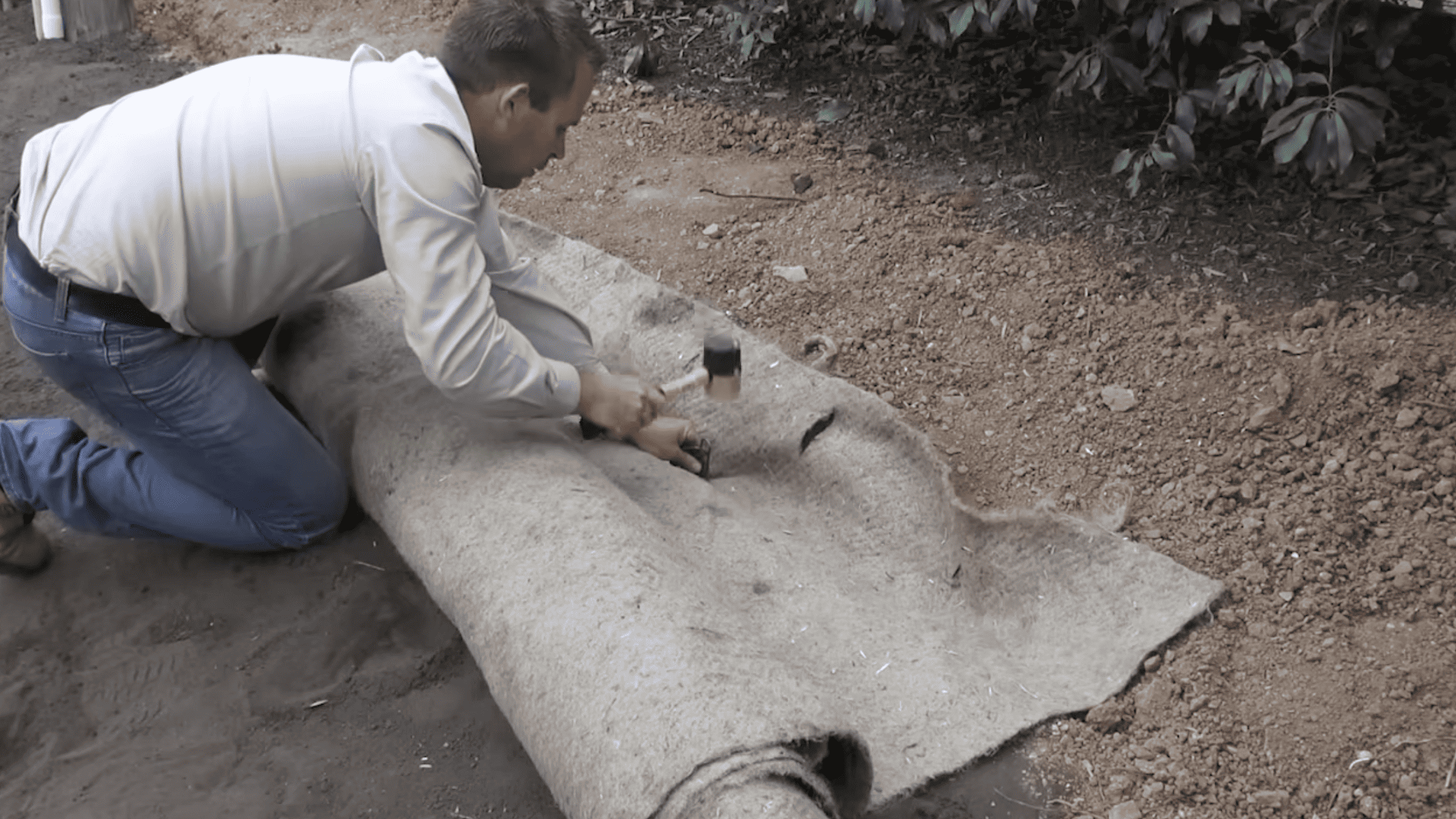
Geotextile and geofabric refer to the same family of products.
The geotextile vs geofabric question trips up buyers across Australia. Both terms describe permeable synthetic fabrics designed to work with soil, but "geofabric" has become the everyday word here while "geotextile" stays the technical standard everywhere else.
This guide covers where each name comes from, how woven and non-woven types differ, and which product suits different project types. You will also find a GSM selection guide and notes on Australian Standards for trade and civil work.
Already narrowing down your options? Read our full guide on what geotextile fabric is and how to use it or browse the full product range at All Stake Supply.
"Geotextile" is the engineering term for any permeable fabric used in soil applications. It covers woven, non-woven, and knitted varieties made from synthetic polymers like polypropylene and polyester. The word combines "geo" (earth) and "textile" (fabric), and it appears in Australian Standards, engineering specs, and technical literature.
"Geofabric" started as a brand reference in Australia. Geofabrics Australasia, one of the country's largest geosynthetics manufacturers, made the name so common it became a generic word. It is similar to how "Band-Aid" replaced "adhesive bandage" in everyday speech.
In practice, when a landscaper or builder says "geofabric," they typically mean a heavy-duty woven geotextile for separation or stabilisation. If a spec calls for "geotextile," you have the full range of woven and non-woven options.
The practical decision is not geotextile vs geofabric. It is woven vs non-woven. These two types perform very differently, and picking the wrong one can undermine your project from day one.
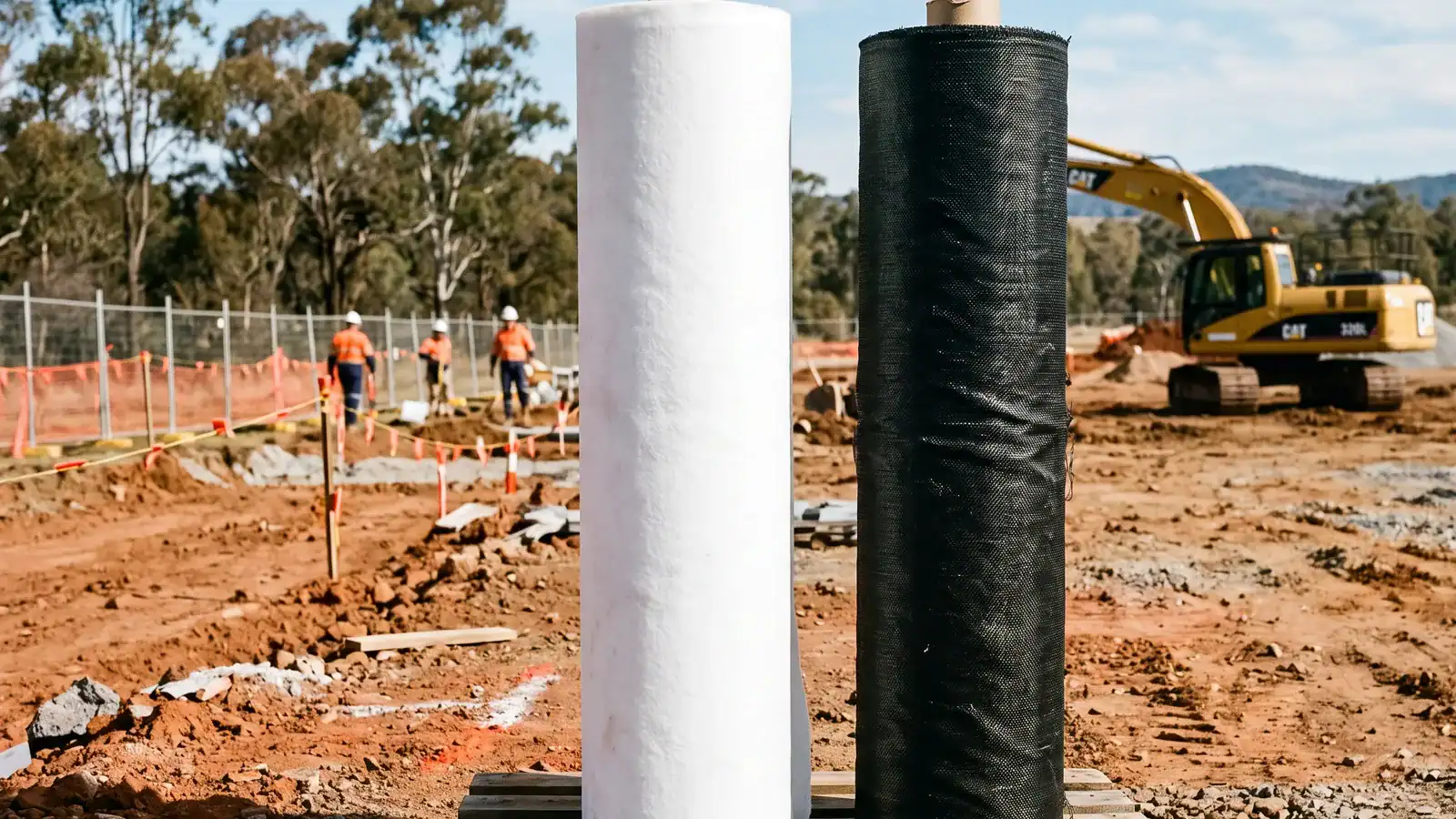
Made by interlacing polypropylene tapes on a loom. The result is a flat, strong material with low stretch, typically 5 to 25% elongation at break.
Woven geotextile handles separation and load distribution well. You will find it under driveways, access roads, and parking areas where the fabric needs to hold aggregate layers apart without deforming under traffic.
Manufactured by needle-punching or heat-bonding random fibres together, creating a felt-like material. Non-woven geotextile has higher elongation (50%+) and better filtration because water passes through the random fibre matrix while fine soil particles stay put. That makes it the standard choice for drainage wraps, geofabric behind retaining walls, and French drain systems.
| Property | Woven | Non-Woven |
|---|---|---|
| Tensile strength | Higher | Lower |
| Elongation at break | 5-25% | 50%+ |
| Water permeability | Lower flow rate | Higher flow rate |
| Primary function | Separation, stabilisation | Drainage, filtration |
| Typical GSM range | 80-250 | 100-300 |
| Common uses | Driveways, roads, car parks | French drains, retaining walls, garden beds |
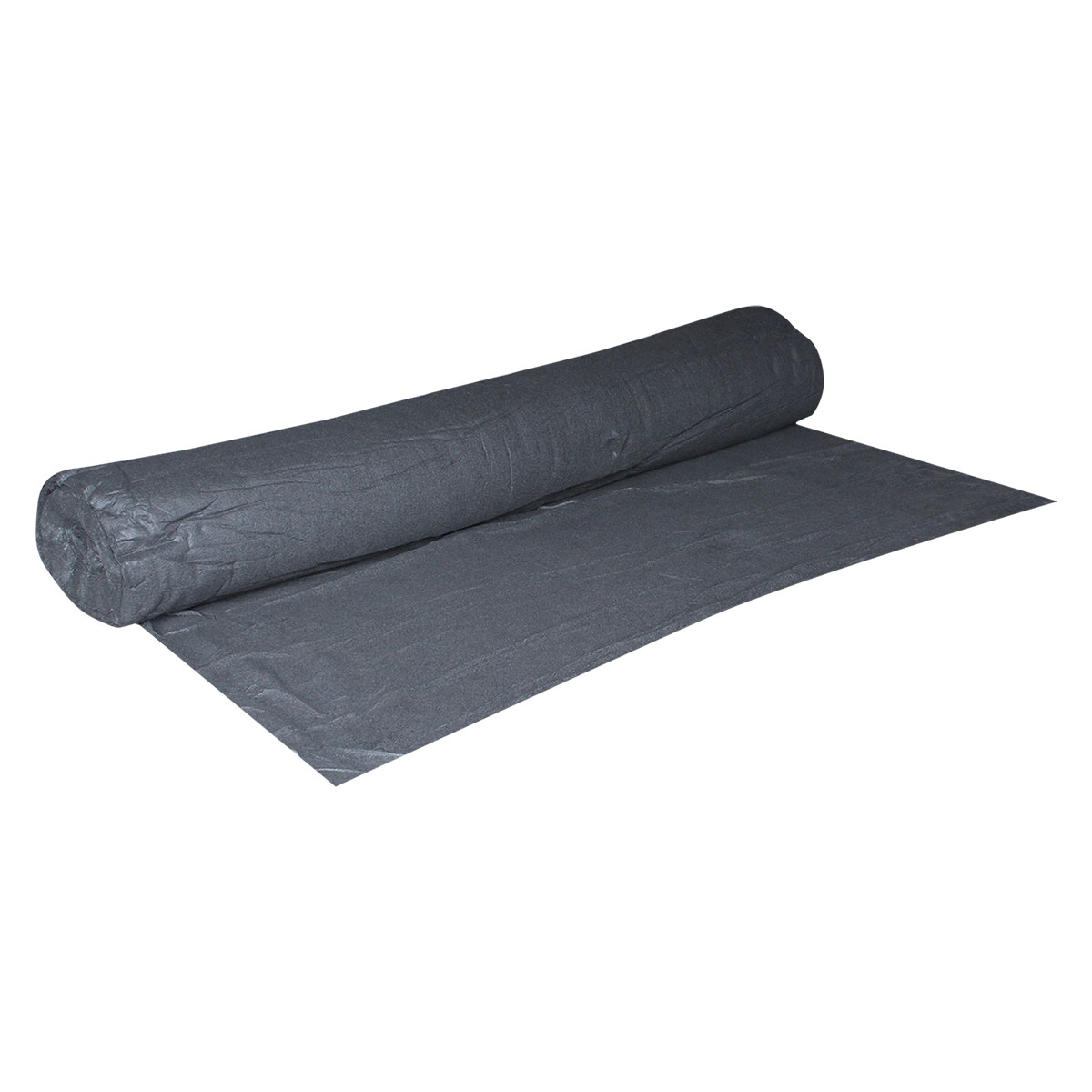
All Stake Supply stocks non-woven drainage membrane rolls in widths from 0.6 m to 4 m, plus woven poly weed mat for separation and weed suppression.
Choosing the right type comes down to the job you need the fabric to do. Here is a straightforward guide by application.
Not sure which product suits your project? All Stake Supply has been matching geotextile products to Australian conditions since 1976, with 1,000+ products in stock at their St Marys NSW warehouse. Contact the team for advice.
GSM (grams per square metre) measures fabric density. Heavier is not always better. It just means thicker, which affects both performance and cost.
| Project Type | Recommended GSM | Geotextile Type |
|---|---|---|
| Garden beds, light landscaping | 80-120 GSM | Woven or non-woven |
| French drains, retaining walls | 100-200 GSM | Non-woven |
| Driveways, parking areas | 150-250 GSM | Woven |
| Road base, heavy civil works | 200-400 GSM | Woven |
| Under riprap or rock armour | 300-600 GSM | Non-woven |
For most residential projects, a 100 GSM non-woven membrane or an 85 GSM woven weed mat handles the job. Trade and civil projects typically need 200+ GSM with specific tensile strength ratings to meet engineering specifications.
Geotextile sold for civil or government projects in Australia should meet AS 3706, the Australian Standard series covering geotextile testing methods. State road authorities and councils reference this standard in their project specifications, including Transport for NSW road construction guides.
The standard covers:
For residential landscaping, you do not need to specify AS 3706 compliance. But for council work, road construction, or projects tied to state authority specs, confirm with your supplier that the product has test data to AS 3706. The standard uses "geotextile" exclusively, not "geofabric," which is one more reason the technical term matters on commercial jobs.
Environmental projects involving waterway protection or land rehabilitation may also need to meet guidelines from the Australian Department of the Environment, particularly where sediment control is part of the project scope.
The geotextile vs geofabric question has a simple answer: same family of products, different names. What actually matters is choosing between woven and non-woven, getting the right GSM for your project, and making sure the fabric does the specific job you need.
Browse the full range at All Stake Supply or contact the team for trade pricing and bulk orders. Family-owned since 1976 with guaranteed complete delivery on every order.
Yes, geofabric is an informal Australian term for geotextile. "Geotextile" is the technical name used in engineering standards and specifications. "Geofabric" became common in Australia partly because of Geofabrics Australasia, a major local manufacturer. Both terms describe permeable synthetic fabrics used with soil for separation, filtration, drainage, or reinforcement.
Woven geotextile is made by interlacing polypropylene tapes, giving it high tensile strength and low stretch. It works best for separation under driveways, roads, and load-bearing surfaces. Non-woven geotextile is needle-punched or heat-bonded, creating a felt-like material with better water flow. It suits drainage, filtration behind retaining walls, and wrapping ag pipes.
Synthetic geotextile made from polypropylene or polyester can last 50+ years when buried and protected from UV light. Above-ground exposure breaks down the fibres over time, which is why UV-stabilised products are rated to AS 3706.11 for minimum retained strength after extended exposure.
It depends on your subgrade. If the soil is soft or clay-heavy, a woven geotextile between the subgrade and crushed rock base prevents the base material from sinking over time. For well-draining sandy soils, geotextile under pavers is often unnecessary. Non-woven works if your main concern is drainage rather than separation.
Not exactly. Weed mat is a specific type of woven geotextile designed to block light and suppress weed growth. Standard geotextile products serve broader functions including drainage, filtration, and soil separation. All Stake Supply stocks both, so check what a weed mat is and how it works if weed control is your main goal.