Geotextile fabric separates soil, filters water, and reinforces ground across every type of Australian project.
Whether you are wrapping ag pipe behind a retaining wall or stabilising a creek bank, the right geotextile fabric stops soil migration and adds years to the finished work. Pick the wrong type and you will be digging it up inside two seasons.
This guide covers the types of geotextile fabric available in Australia, the GSM ratings that matter for each job, and how to match fabric to application so you order once and get it right.
Already know the basics? Read our full overview on what geotextile fabric is and how to use it, or jump straight to non-woven geotextile drainage membrane rolls in our online store.
Every geotextile falls into one of two camps: woven or non-woven. Woven geotextile is made from interlaced polypropylene or polyester threads, giving it high tensile strength and low elongation (typically 5 to 25 percent). That makes it the go-to choice for load-bearing applications like road sub-bases, driveways, and retaining wall reinforcement.
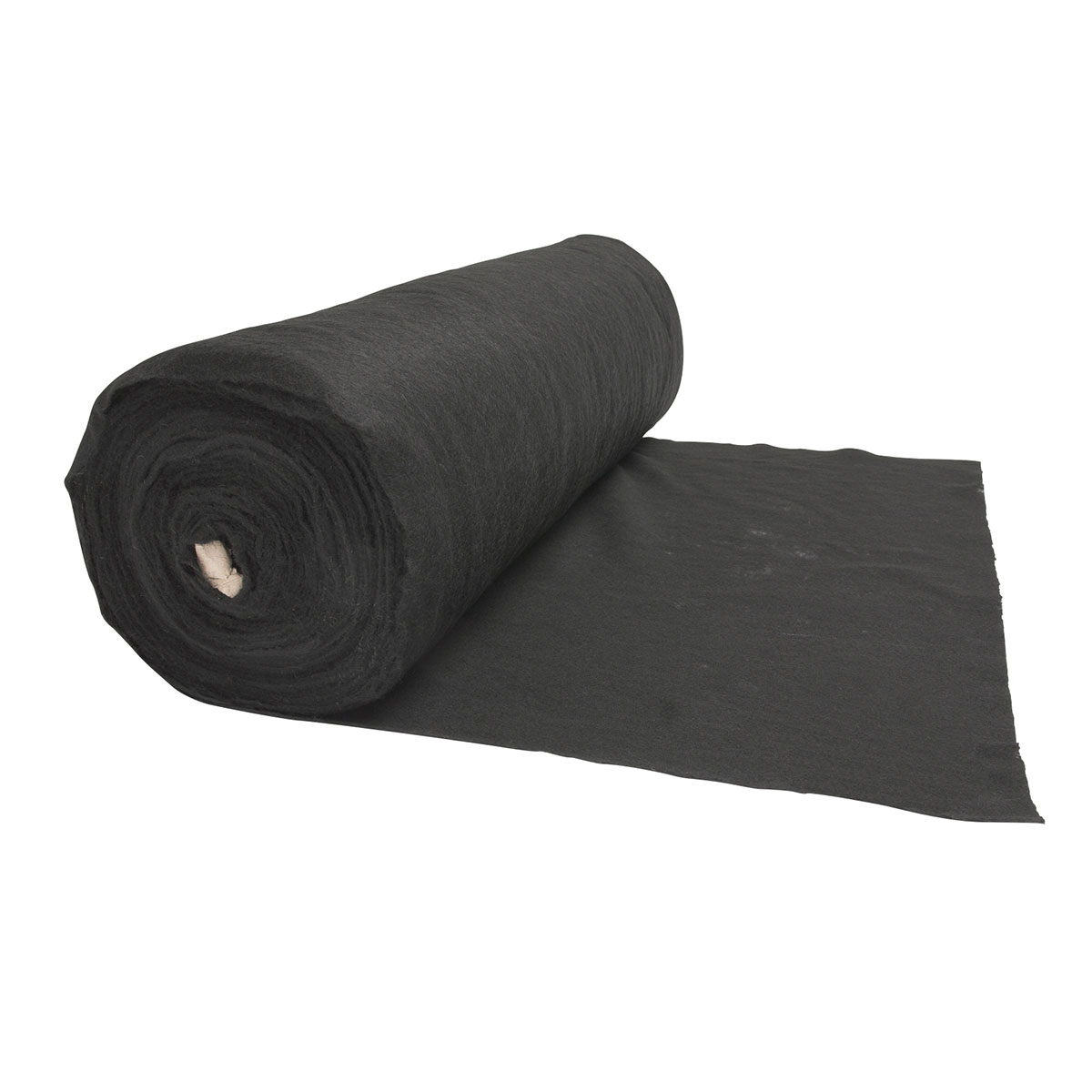
Non-woven geotextile uses needle-punched or heat-bonded fibres. It stretches more (50 percent or above), but its real advantage is permeability. Water passes through freely while soil fines stay put.
That is exactly what you want around ag pipe, in French drains, and beneath rock armour on embankments.
| Feature | Woven Geotextile | Non-Woven Geotextile |
|---|---|---|
| Manufacturing | Interlaced threads | Needle-punched or heat-bonded fibres |
| Tensile strength | High | Moderate |
| Elongation | 5-25% | 50%+ |
| Permeability | Lower | Higher |
| Best for | Separation, stabilisation, load bearing | Filtration, drainage, erosion control |
| Typical Australian use | Driveways, roads, retaining walls | Ag pipe wrapping, French drains, landscaping |
A common mistake on Australian sites is using woven fabric where drainage matters most. Woven restricts water flow, causing hydrostatic pressure behind retaining walls. If filtration outweighs raw strength, go non-woven.
For a deeper look at woven fabric specifications and where they perform best, see our guide on woven geotextile fabric for Australian projects. If non-woven is the better fit, our breakdown of when to use non-woven geotextile fabric covers the full range of drainage and filtration applications.
GSM stands for grams per square metre, and it is the quickest way to gauge how thick and strong a geotextile fabric is. Higher GSM means a denser, more durable fabric, but heavier is not always better.
Overspecifying wastes money. Underspecifying means the fabric tears during backfill or fails under traffic loads.
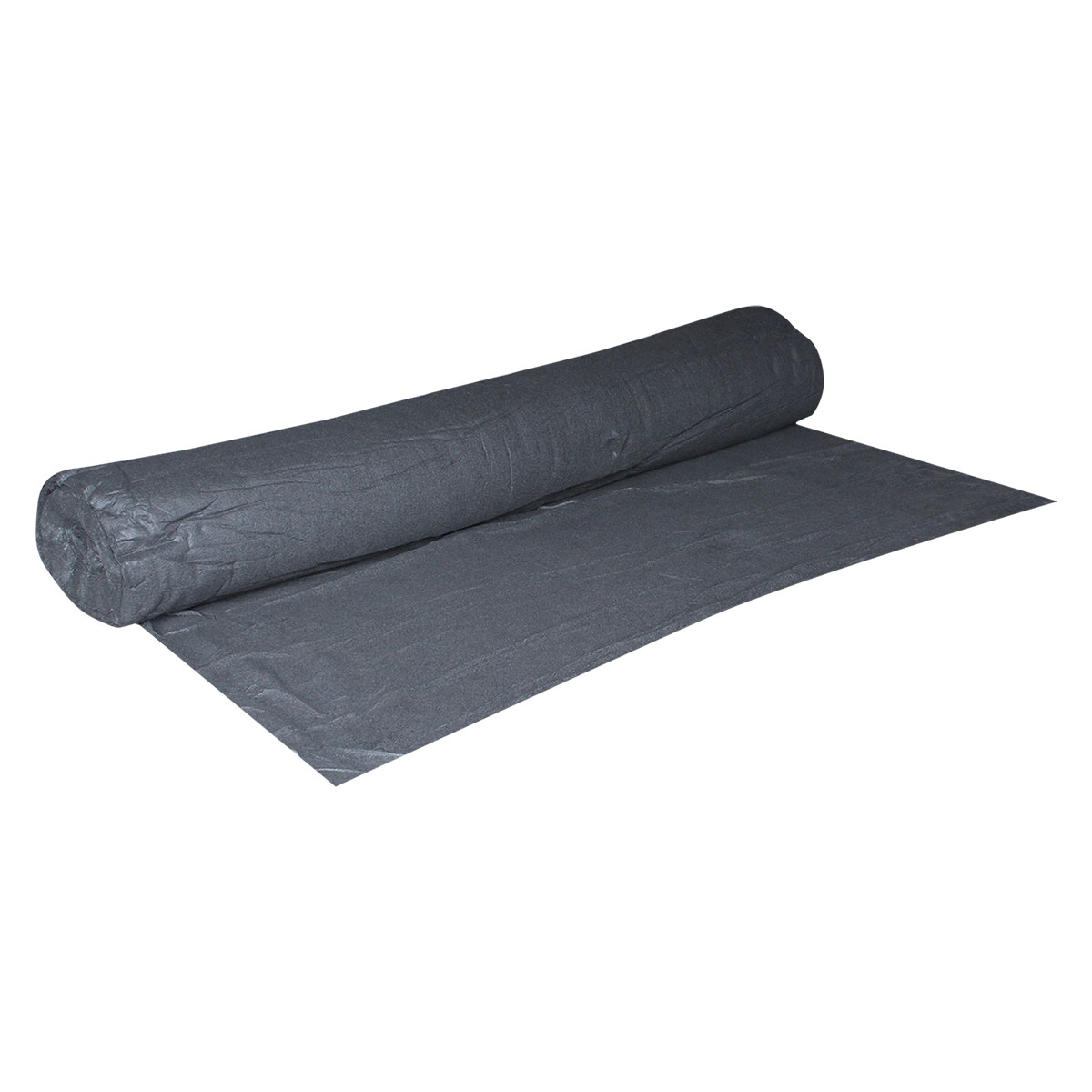
All Stake Supply stocks 100 GSM non-woven geotextile in widths from 0.6 m rolls up to 4 m x 100 m rolls, which covers the bulk of residential and light commercial jobs. For heavier specifications, contact the team for trade pricing.
Geotextile does more than sit between soil layers. Its five core functions determine which type and weight you need.
Keeps two distinct soil layers from mixing. Without a separation layer beneath a gravel driveway, for example, aggregate punches into the subgrade within a few wet seasons and the surface loses shape. Woven geotextile is the standard pick here.
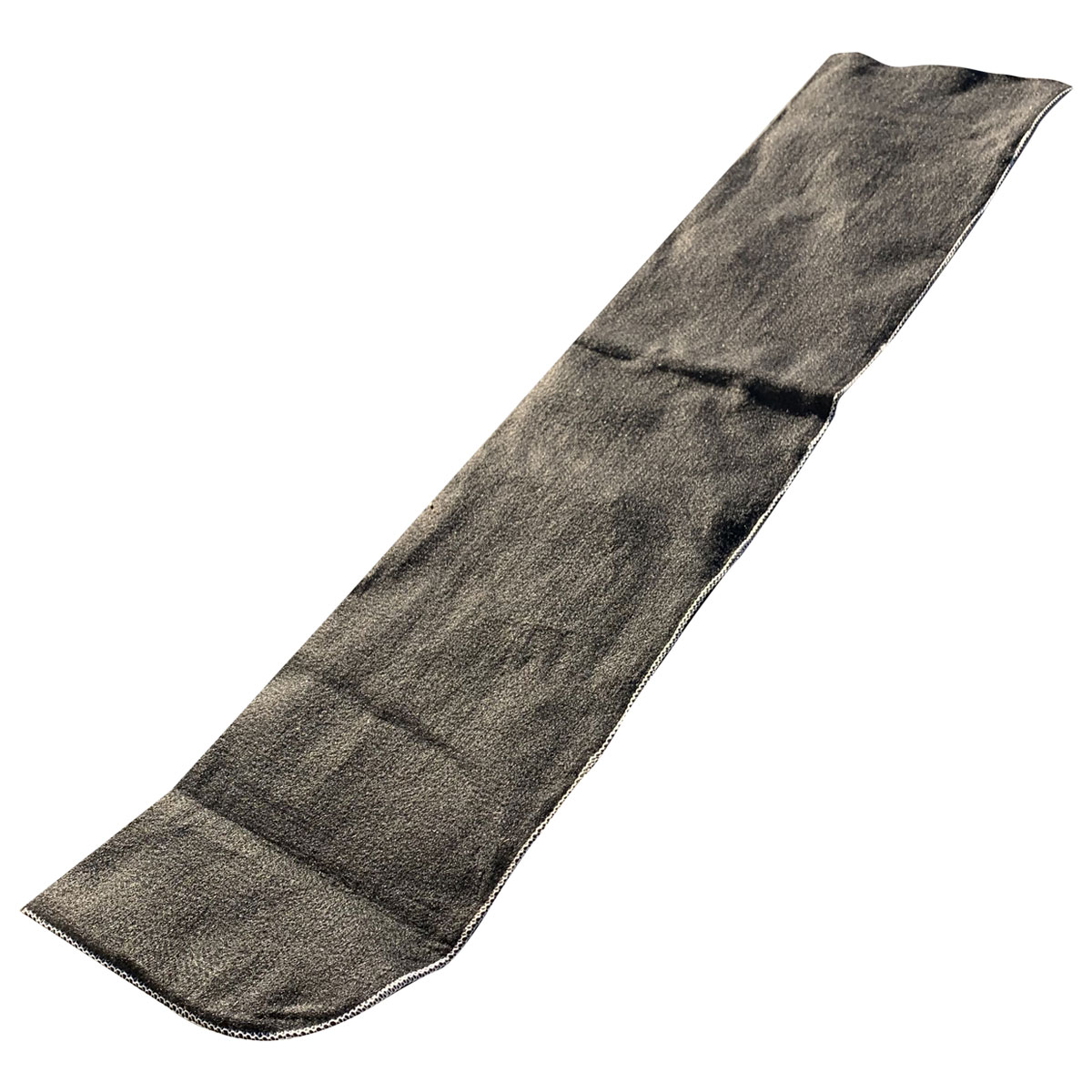
Allows water to pass while holding back soil particles. Non-woven geotextile wrapped around geotextile filter tubes or ag pipe stops fines from clogging the drainage system. This is critical in Australian clay soils, which produce fine sediment that blocks poorly filtered drains within months.
For a full walkthrough of how geotextile handles filtration in drainage systems, see our guide on how to use geotextile filter fabric the right way.
Non-woven geotextile transmits water along the plane of the fabric itself. Behind retaining walls, it collects groundwater and directs it to weep holes or outlet pipes.
High-strength woven geotextile adds tensile capacity to weak soils. On road projects across Australia, this lets engineers reduce the depth of imported fill.
Acts as a cushion layer over waterproof membranes in dams, landfills, and stormwater basins, absorbing point loads from rocks and backfill.
Australian conditions put geotextile to work harder than most countries. Reactive clay soils across western Sydney, Brisbane, and Melbourne expand and contract with moisture. Sandy coastal soils on the Gold Coast and Perth erode fast under rainfall that the Australian Department of Climate Change, Energy, the Environment and Water links to increasing land degradation pressure.
Trade tip: On large civil and landscaping jobs, All Stake Supply delivers geotextile rolls Australia-wide from their St Marys NSW warehouse. One order, complete delivery, no partial shipments holding up the site. Browse the full product range.
Standards Australia publishes AS 3706, the standard covering geotextile testing methods. It sets out how to measure tensile strength, tear resistance, puncture resistance, permeability, and apparent opening size.
When a civil engineer specifies "Class A" or "Class B" geotextile, they are referencing performance thresholds defined under this standard.
For residential and standard landscaping work, you rarely need to cite specific AS 3706 classes. A 100 GSM non-woven fabric handles the majority of home drainage and garden separation jobs without needing an engineer's sign-off.
If your project requires a formal erosion and sediment control plan, our guide on how to write an erosion and sediment control plan explains the documentation councils expect and how geotextile fits into the specification.
After nearly 50 years supplying Australian projects, the All Stake Supply team sees the same ordering errors regularly. Most are easy to avoid.
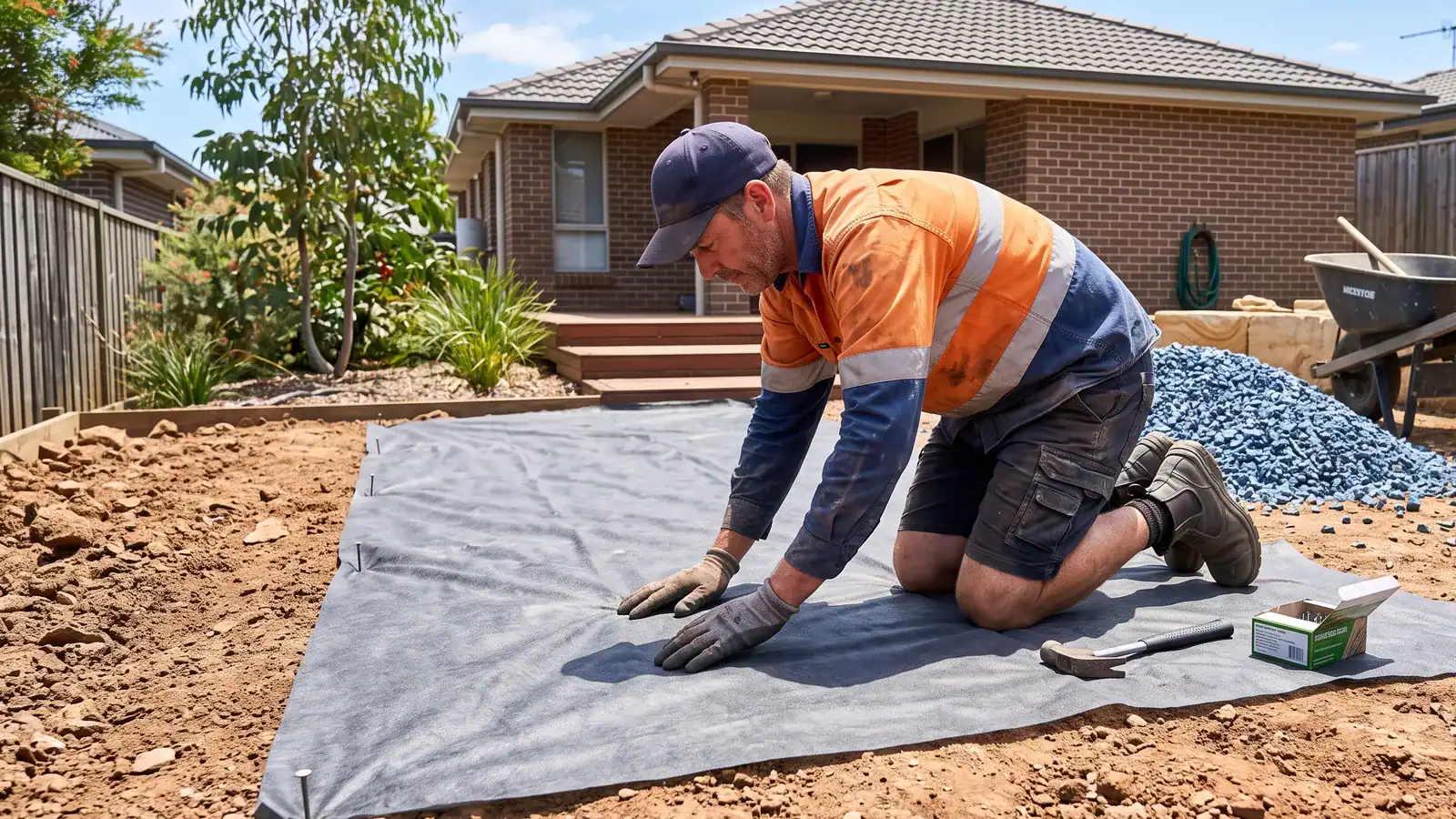
Correct installation matters as much as choosing the right fabric. A poorly laid geotextile shifts during backfill, leaves gaps at overlaps, or fails to drain where it should. The steps below apply to most drainage and separation jobs on Australian sites.
For retaining wall applications specifically, the fabric wraps around the drainage gravel behind the wall and tucks into the footing drain. Our detailed guide on how to choose geotextile drainage fabric covers material selection and placement for these setups.
Woven geotextile is made from interlaced threads, giving it high tensile strength with low stretch for separation and load-bearing jobs like driveways. Non-woven geotextile uses bonded fibres, stretches more, and lets water through freely, making it the better option for drainage and filtration.
For residential drainage and garden beds, 100 GSM non-woven fabric is the standard. Light commercial driveways and paths work well with 100 to 150 GSM woven fabric. Heavy civil applications like industrial hardstands and road bases call for 200 GSM or above.
Buried geotextile made from polypropylene or polyester can last 50 years or more. UV light is the main enemy, so once covered with soil or aggregate, degradation is minimal. Fabric left exposed to sunlight will weaken within months.
No. Geotextile is designed to filter water and separate soil layers, while weed mat blocks light to suppress weed growth. They look similar but do different jobs, and using the wrong one will cause problems.
Measure the area you need to cover and add 300 to 500 mm for overlaps. For retaining wall drainage, measure the wall height plus the base width. All Stake Supply stocks rolls from 0.6 m to 4 m wide, so you can usually find a width that avoids joins.
On slopes and exposed surfaces, yes. Steel fastening pins at 1 m intervals hold the fabric in place during backfill. On flat ground that will be covered immediately with aggregate, pinning is optional but still recommended.
Non-woven geotextile lets water pass through freely while blocking soil particles. That is why it is the standard choice for drainage wraps and French drains. Woven geotextile has lower permeability and is designed more for separation and reinforcement than for water flow.
In Australia, "geotextile" and "geofabric" are used interchangeably. Both refer to the same permeable textile used for separation, filtration, and drainage. Some suppliers use "geofabric" as a brand or trade name, but the product and function are the same. Our comparison of geotextile vs geofabric explains the naming in detail.
Yes, and you should. Woven geotextile between the subgrade and gravel stops aggregate from sinking into soft soil, which keeps the driveway surface level and reduces the amount of top-up gravel needed over time. On clay subgrades this can double the working life of the driveway.
Getting the right geotextile comes down to woven or non-woven, the correct GSM weight, and the right roll width. Australian conditions make proper selection more important here than in drier climates.
All Stake Supply has stocked geotextile and erosion control products from their St Marys warehouse since 1976. Browse the erosion control range online or contact the team for trade pricing and bulk orders.