Woven polypropylene at 85gsm or above is the best all-round weed mat for most Australian projects.
That said, "best" depends entirely on whether you need the mat to last a decade under gravel or break down within two years on a revegetation site. The wrong choice wastes money and creates problems you did not budget for.
This guide compares the three main weed mat types sold in Australia, explains what GSM ratings actually mean in practice, and walks through how to match the right product to your site.
Already know what type you need? Browse the full weed mat range at All Stake Supply or read our guide on how to install weed mat for lasting results.
The Australian market splits into three categories: woven polypropylene (synthetic, long-lasting), jute matting (biodegradable, mid-weight), and coir matting (biodegradable, lighter weight). Each one solves a different problem, and mixing them up is one of the most common ordering mistakes on landscaping jobs.
Woven polypropylene dominates commercial landscaping, civil works, and any project where the mat needs to stay intact for years. Jute and coir suit revegetation, council planting programs, and garden beds where you want the mat to decompose and feed the soil.
| Feature | Woven Polypropylene | Jute Matting | Coir Matting |
|---|---|---|---|
| Lifespan | 10-15 years | 12-24 months | 18-36 months |
| GSM range | 85-110gsm | 620-750gsm | 400-900gsm |
| Water permeability | Good | Excellent | Excellent |
| Biodegradable | No | Yes | Yes |
| Best for | Paths, driveways, under aggregate | Revegetation, garden beds | Slopes, erosion-prone planting |
| UV resistance | High (stabilised) | Moderate | Moderate |
Non-woven synthetic mats exist too, but most professional suppliers have moved away from them. They deteriorate within three to five years even with UV treatment, and the callbacks on failed installations make them a poor investment for anyone working at scale.
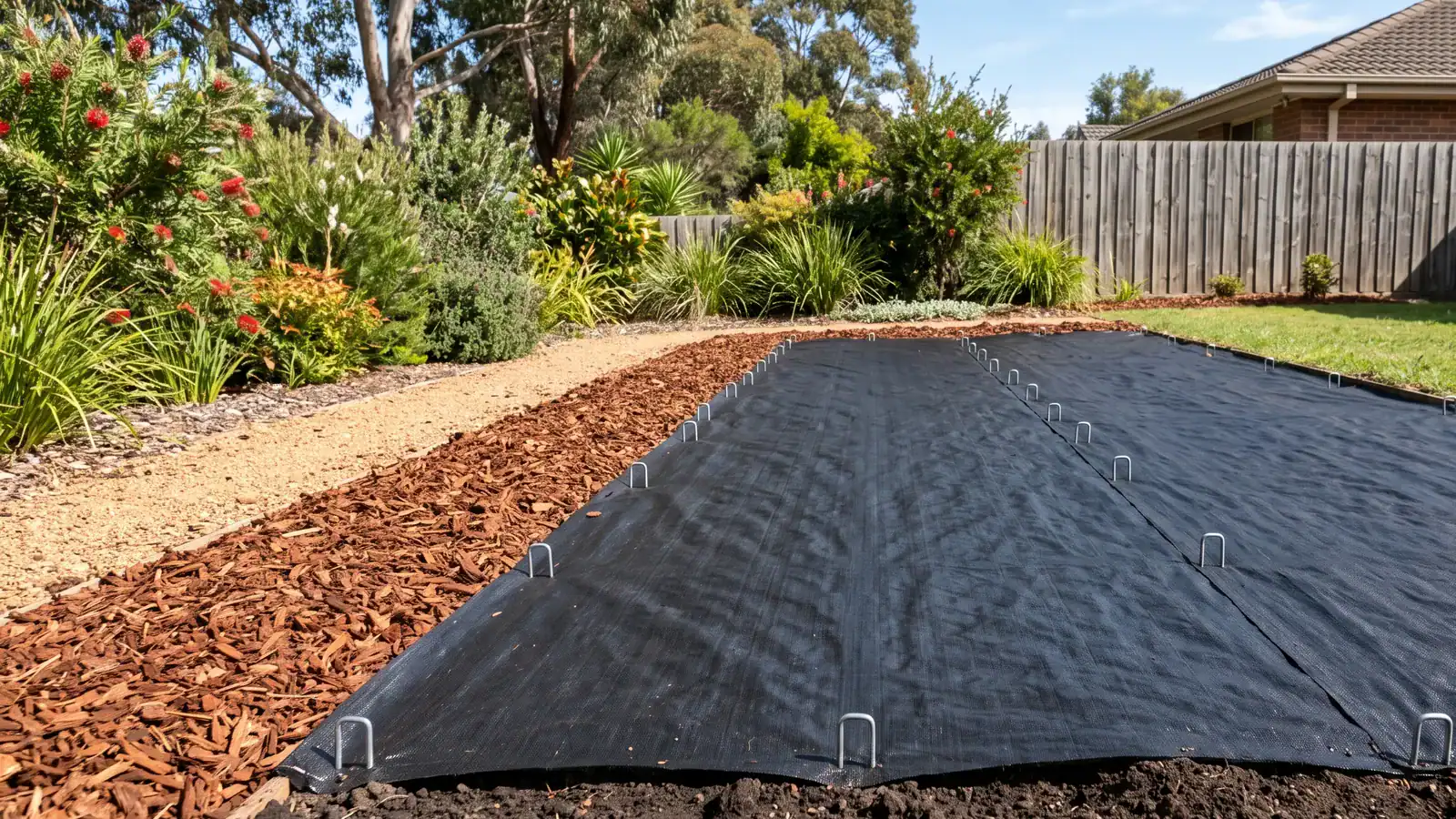
If your weed mat needs to survive longer than two years, woven polypropylene is the only serious option. The woven construction creates a dimensionally stable fabric that resists tearing, handles foot traffic, and maintains consistent water permeability throughout its life.
Two GSM weights cover most applications. An 85gsm woven poly weed mat handles garden beds, planting areas, and light-traffic paths where the mat sits under mulch or aggregate. Step up to 110gsm woven poly for commercial sites, driveways, and anywhere the mat faces vehicle loads during installation.
When woven poly is the right call:
UV stabilisation is the critical spec to check. Imports without proper UV treatment start cracking within 12 months under Australian sun. All Stake Supply's woven poly mats are UV-stabilised and purpose-built for Australian conditions, backed by 48 years of product knowledge from their St Marys warehouse.
For revegetation, council planting, and garden beds where you want the mat to break down and improve soil structure, biodegradable options are the better choice. Trying to pull out a synthetic mat two years into an established planting is a painful, root-damaging exercise that nobody enjoys.
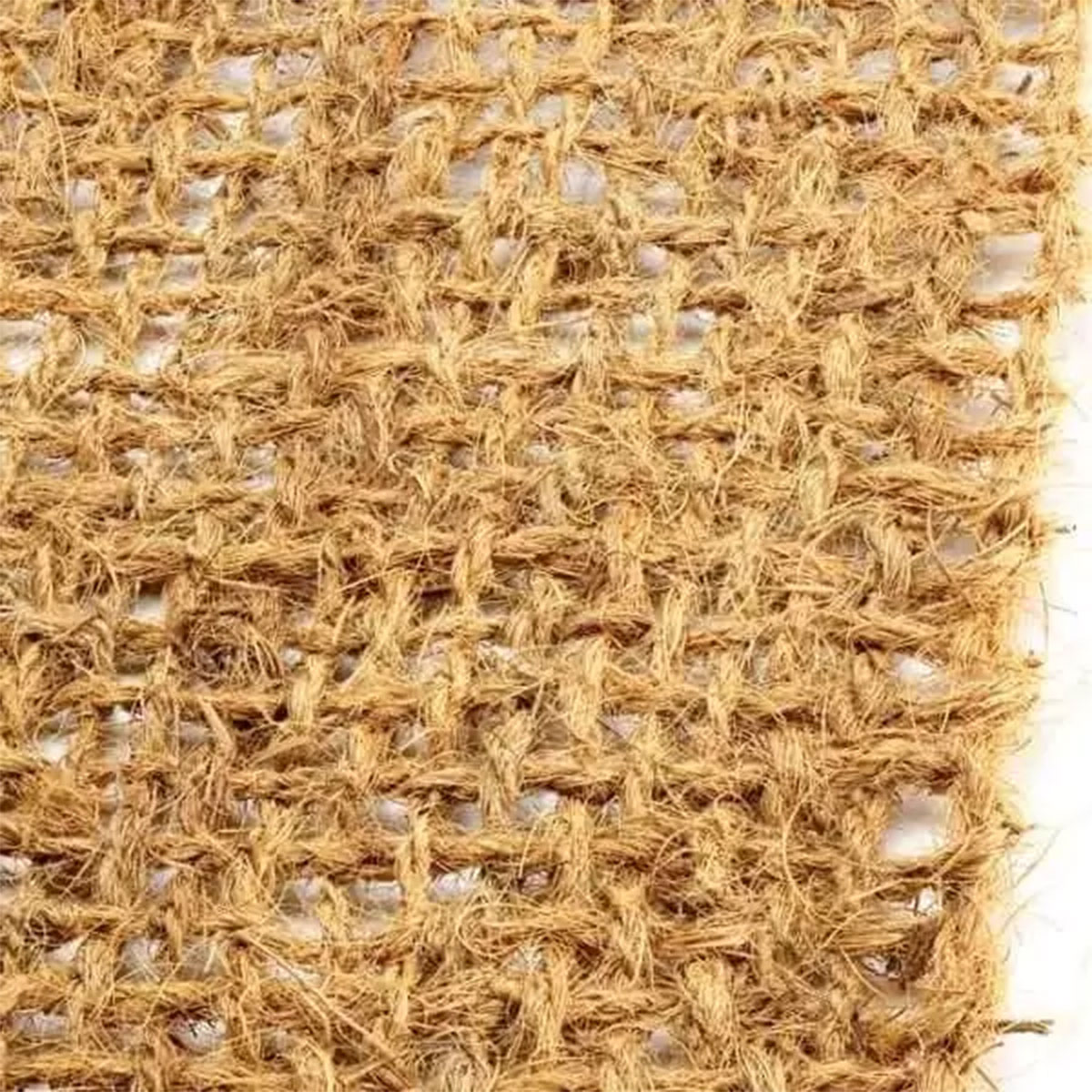
Jute matting comes in two standard weights. 620gsm jute matting suits general weed suppression around new plantings and breaks down over 12 to 18 months. 750gsm thick jute matting lasts closer to 24 months and works on steeper sites where you need more body in the fabric.
For individual tree and shrub plantings, pre-cut jute weed mat squares save time on site. You get a neat square around each plant without cutting from a roll.
Coir matting is made from coconut fibre and sits between jute and poly for longevity. A 400gsm coir roll lasts 18 to 36 months depending on soil moisture and climate. Coir holds up to eight times its weight in water, making it a strong pick for slopes and erosion-prone sites where moisture retention matters as much as weed control. The Australian Department of Climate Change, Energy, the Environment and Water recommends biodegradable matting for revegetation projects on public land.
GSM stands for grams per square metre. It measures fabric weight, not thickness, although heavier mats are generally thicker and more durable. The number tells you how much punishment the mat can take and, for biodegradable products, roughly how long it will last before breaking down.
| GSM Range | Weight Class | Typical Use |
|---|---|---|
| 60-80gsm | Light | Short-term garden beds, temporary cover |
| 85-100gsm | Standard | Residential paths, garden beds, under mulch |
| 100-120gsm | Heavy | Commercial paths, driveways, high-traffic areas |
| 400-750gsm | Biodegradable | Revegetation, planting, erosion control |
| 900gsm+ | Heavy biodegradable | Steep slopes, high-flow erosion sites |
GSM does not tell the full story. A 90gsm woven poly mat will outperform a 120gsm non-woven mat because the woven construction is structurally stronger. Always compare GSM within the same material type.
For most residential and light commercial projects, 85gsm woven poly or 620gsm jute covers the job. Only step up if site conditions demand it.
Start with two questions: how long does the mat need to last, and will it be covered?
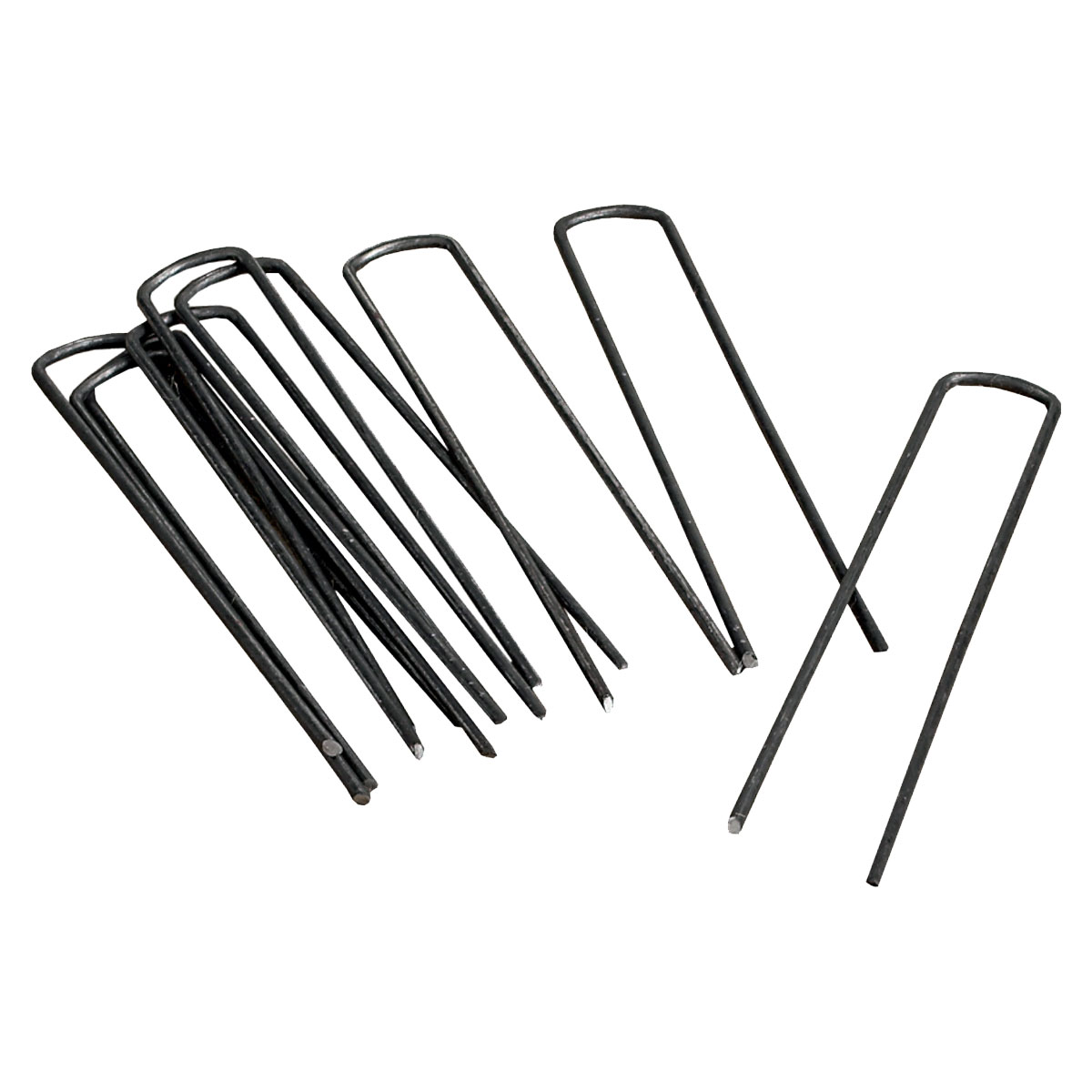
Go with 110gsm woven polypropylene. You are never removing this mat, so longevity and dimensional stability matter most. Pin it with steel fastening pins at 300mm centres along edges and overlaps.
85gsm woven polypropylene works well under mulch. If you plan to replant the bed within a few years, consider jute instead. Pulling synthetic mat out of an established garden bed is the kind of job that makes you question your planning.
Jute or coir. The mat suppresses weeds while seedlings establish, then decomposes and adds organic matter to the soil. This is the approach most councils and land care groups across Australia prefer. Our guide on how to use weed mat for landscaping and erosion control covers the full installation process for biodegradable mats.
Heavier coir (700-900gsm) or thick jute (750gsm) on slopes. The weight helps the mat stay put during rain before vegetation takes hold. For severe erosion, combine weed mat with erosion control products like coir logs for a more complete stabilisation approach.
Getting the type right is only half the job. These are the mistakes that turn a solid weed mat installation into a wasted one.
Skipping the pins. Unpinned mat lifts in wind, shifts under foot traffic, and bunches up under aggregate. Pin every edge, every overlap, and every cut line. Steel fastening pins at 300mm spacing are the minimum for a job that stays flat.
According to CSIRO's land and soil research, proper ground preparation before fabric installation is the single biggest factor in long-term performance.
Woven polypropylene with UV stabilisation lasts 10 to 15 years when covered with mulch or aggregate. Uncovered, UV exposure cuts that to three to five years. Jute lasts 12 to 24 months and coir 18 to 36 months depending on soil moisture. For a deeper breakdown, read our guide on how long weed mat lasts under different Australian conditions.
Woven. Non-woven fabric deteriorates much faster under Australian UV. Most professional suppliers and landscapers have dropped non-woven lines entirely because the warranty claims and site callbacks made them commercially unviable.
Yes. Cut an X-shape at each planting spot, fold the flaps back, plant, then fold the flaps around the stem. Slitted jute matting comes with pre-cut planting lines that speed this up. Our guide on laying weed mat around existing plants covers the technique step by step.
85gsm woven polypropylene for long-term beds under mulch. 620gsm jute for beds you plan to replant within a couple of years. If you are unsure, 85gsm woven poly is the safe default for residential work.
Strongly recommended. Mulch protects the mat from UV, adds weight to prevent shifting, and looks far better than bare fabric. Aim for 50 to 75mm depth over the entire mat surface.
For revegetation and any site where long-term soil health matters, yes. The mat suppresses weeds while plants establish, then decomposes to add organic matter. You also skip the labour cost of removing synthetic mat later, which often offsets the higher material price.
The best weed mat for your project comes down to how long you need it and what sits on top of it. Woven polypropylene handles permanent installations. Jute and coir handle temporary weed control where you want the mat to disappear on its own.
All Stake Supply has stocked weed control and erosion products from their St Marys warehouse since 1976, with over 1,000 products in stock and guaranteed complete delivery. Browse the full weed mat range or contact the team for trade pricing and bulk orders.